
Introduction
“Sometimes it is all about knowing how to bring new viewpoints to a rather parochial small New England town,” a Lee elder advised me when I began researching the history of Jacob’s Pillow and its neighboring town of Lee. “I am not a native either, so I had to find ways of fitting in.”
I felt that reality when my family closed on our home a little over a dozen years ago. We were told, with sincerity, that people in Lee do not say they are “from Lee” unless they are at least third generation residents. It reflected the town’s rootedness and continuity pride. In Lee, identity is shaped over time and carried through families, neighborhoods, and shared memory.
Questions of place and belonging are central to the story of Jacob’s Pillow. They resonate with me as a relative newcomer to the Berkshires. They also echo the experience of those who came long before me.
Ted Shawn and the Town of Lee, 1930–1941
When Ted Shawn purchased Jacob’s Pillow in the early 1930s, he chose an isolated Berkshire hillside in Becket. Yet from the beginning, the institution’s social and economic orbit centered on Lee.
Shawn and his dancers banked in Lee, saw Lee doctors and dentists, did masonry work with Lee marble, shopped on Main Street, and collected their mail downtown. The Pillow’s letterhead carried a Lee address, and reservations for the Friday Teas beginning in 1933 were made by writing to P.O. Box 87, Lee, Massachusetts. Jacob’s Pillow retained its Lee mailing address until 2004.
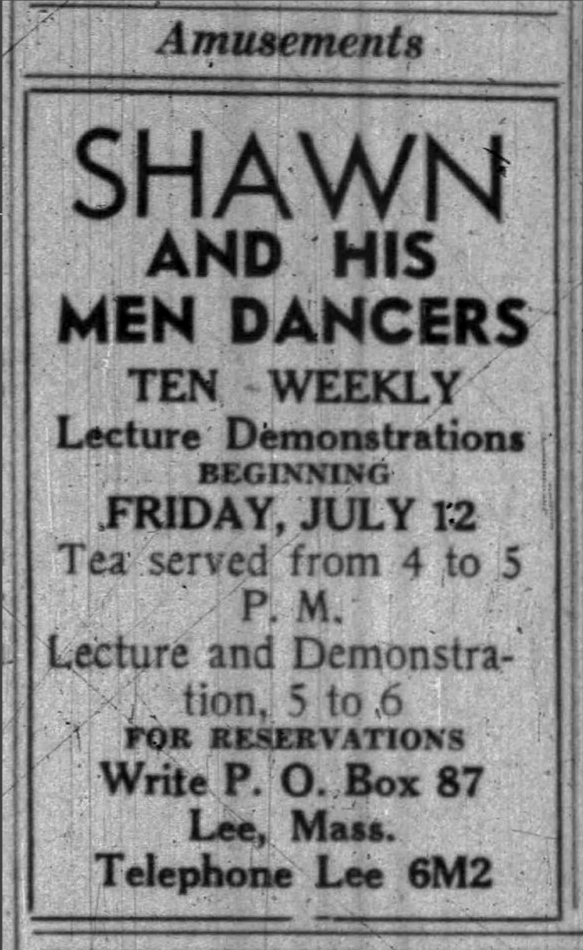
The Friday Teas quickly became a weekly summer tradition. Locals drove up the mountain to sit in a barn and watch lecture demonstrations. The Berkshire Gleaner described audiences as a “cross-section of the residents of cultural Berkshire” The Berkshire Gleaner, September 3, 1937 and noted that Berkshire residents had come to consider the Shawn group “almost a native product.” The Berkshire Gleaner, May 28, 1937
Shawn cultivated civic ties. He spoke to the Lee Rotary Club The Berkshire Eagle, September 29, 1933 and the Lee Chamber of Commerce. The Berkshire Gleaner, July 26, 1935 On July 25, 1935, he told the Chamber: “You’ve got me, for as long as I live, as a citizen of Lee. I feel this is my hometown. I’m glad to be here.”The Berkshire Gleaner, July 26, 1935 In 1936 he described himself to the Chamber as a “traveling press agent for Lee,” emphasizing how often the town’s name appeared in his promotional materials and national press coverage. The Berkshire Gleaner, May 28, 1936
I feel this is my hometown. I’m glad to be here."
Not all observers embraced him. Richard V. Happel of The Berkshire Eagle later criticized Shawn’s personality. “At least in the beginning of Jacob’s Pillow, and far along in its history, we felt that in his heart Shawn was convinced most of the audience were yokels, and just about all the local citizens were even worse,” wrote Happel in 1976. “Frequently, in his local contacts, his attitude verged on the imperious. This put off local folks and may, in part, account for the fact that neither he nor the Pillow ever were heartily accepted here.” The Berkshire Eagle, October 23, 1976
Yet contemporaneous reporting painted a fuller picture. “The group is no mere collection of artists, living on another plane from the community its leader has chosen as his pied-a-terre,” wrote a Berkshire Eagle reporter in 1937. “Shawn, early in his Berkshire residence, had many personal friends here.” The Berkshire Eagle, May 26, 1937
By 1940, with war looming, Shawn dissolved his Men Dancers troupe and faced mounting debt. Jacob’s Pillow stood on the brink of bankruptcy or closure.
A Group of Citizens Saved the Pillow
In October 1941, seven local citizens gathered at the Lee home of Mabel Dwight Busey to rescue Jacob’s Pillow. The Berkshire Eagle, November 12, 1941 Shawn was $20,000 in debt. Paul A. Scolieri, Ted Shawn: His Life, Writings, and Dances (New York: Oxford University Press, 2019 The group proposed purchasing the property and forming a nonprofit corporation. Ted Shawn, How Beautiful Upon the Mountain: A History of Jacob’s Pillow (Lee, MA: Jacob’s Pillow Dance Festival, 1943)
Three of the seven founders were from Lee: Busey, Lucile Foote Smith, and Frank J. Diamond. They aimed to raise $50,000 to clear debts and construct a permanent theater. North Adams Transcript, October 13, 1941
In early 1942, Smith issued a public letter urging Lee residents to support construction of the theater. “Stockbridge has its Playhouse, Lenox its Tanglewood, and Lee—to complete the triangle of the Arts—is to have its Dance Theatre,” she wrote. She reminded readers that Shawn had “brought business to Lee and [used] our town as the center of his activities.” The Berkshire Gleaner, February 13, 1942
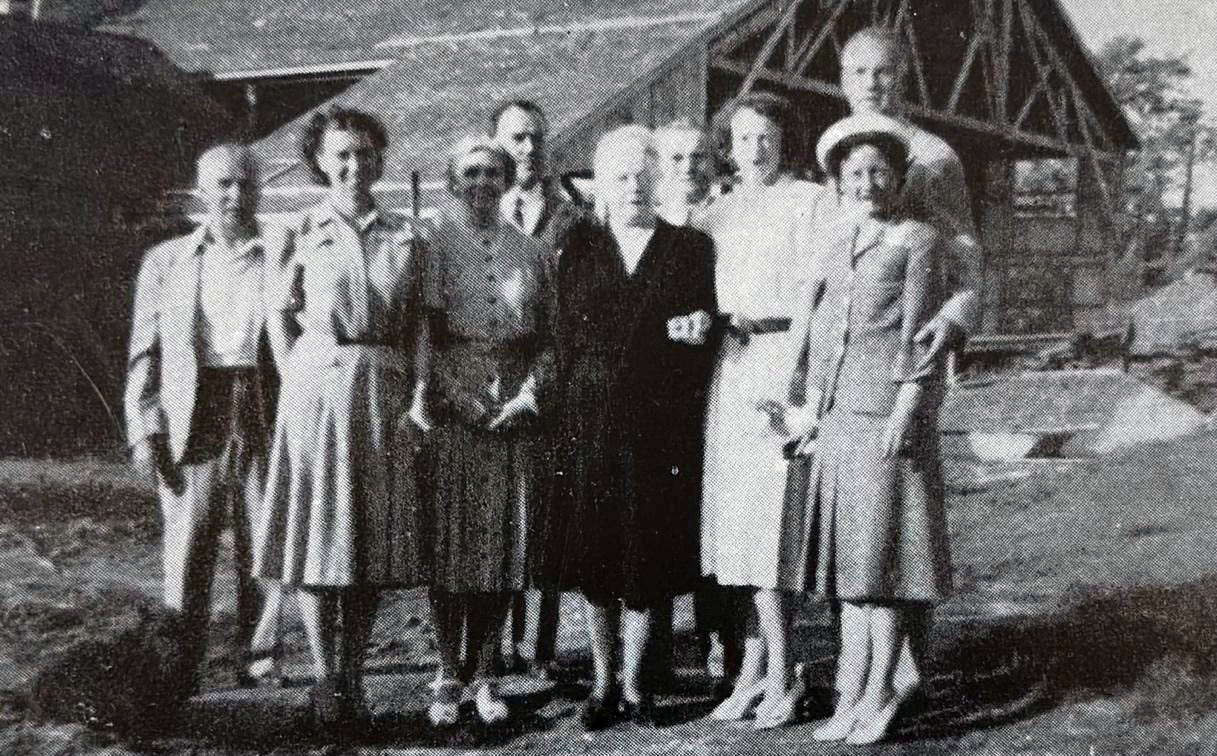
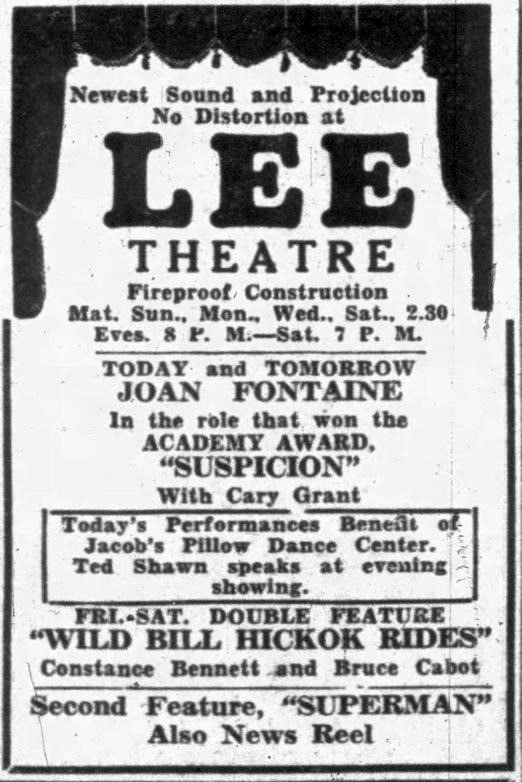
Smith assembled a Lee fundraising committee to encourage local philanthropy. The Berkshire Gleaner, February 13, 1942 The Lee committee displayed a model of the theater at the Lee Library and hosted a benefit screening of an Alfred Hitchcock film, Suspicion at the Lee Theatre. The Berkshire Eagle, May 1, 1942
The Lee Savings Bank stepped in to provide critical loans to complete construction.
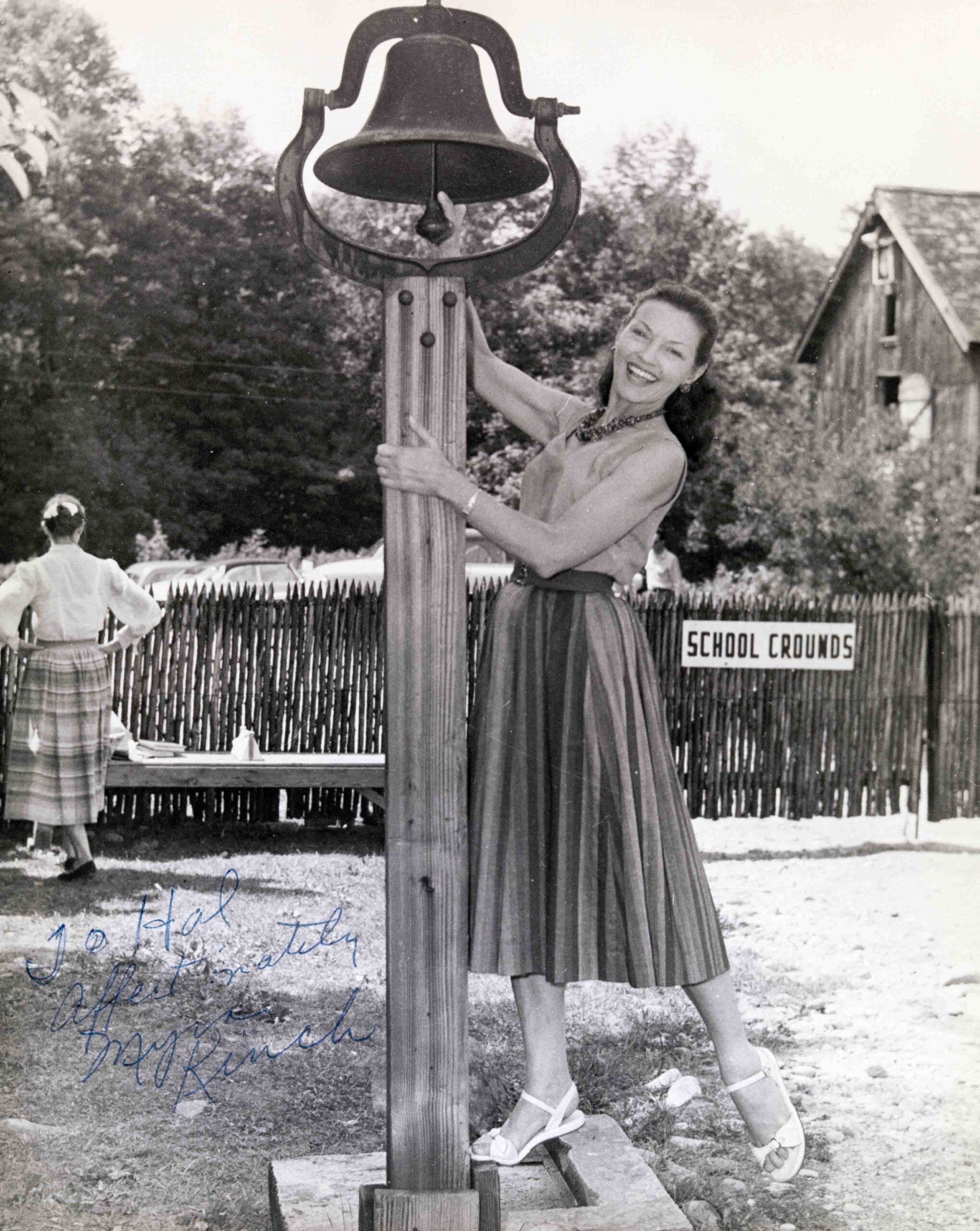
And, Lee dentist Dr. Walter J. Bryans and his wife Grace donated the bell that still rings before performances at the Ted Shawn Theatre. Ted Shawn, The Story of Jacob’s Pillow (Lee, MA: 1969)
Despite wartime shortages, the new theater opened in July 1942 with a program of American folk dance featuring Sammy Spring and Berkshire Dancers from Otis and Becket. Shawn said that audience members “came on foot, on horseback, or even used to hire a hay wagon to transport them to and from” Jacob’s Pillow during the war due to fuel rationing. Ted Shawn, “A Shawn’s Eyeview of Jacob’s Pillow, Dance Magazine, July 1951
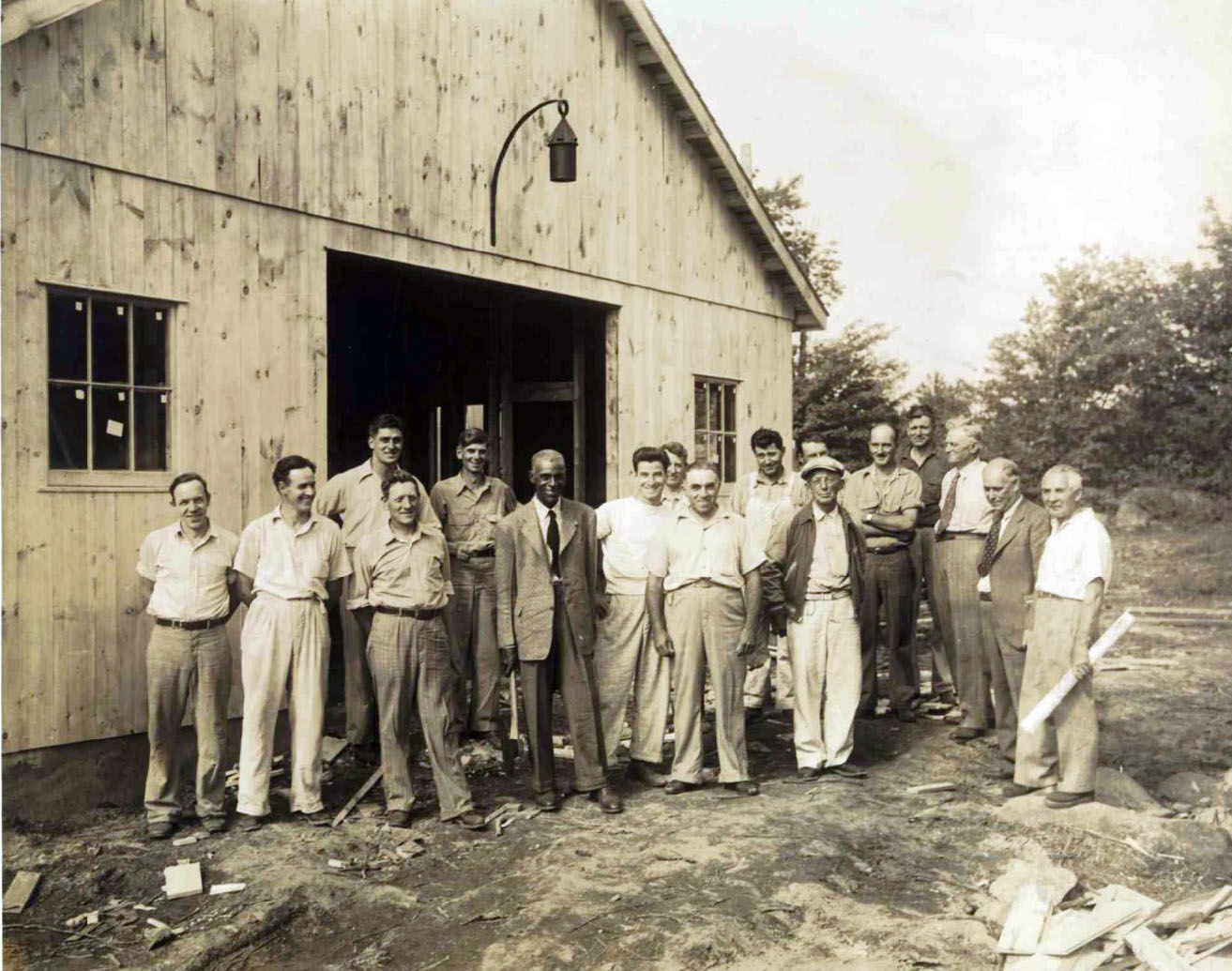
Shawn never forgot the town’s intervention. When Busey – the Pillow’s single largest donor – died in 1947, he wrote that her generosity “made possible the building of the theatre.” Ted Shawn, Seventh Annual Newsletter, February 22, 1951
Administratively and socially, the Festival was rooted in Lee even as performances took place in Becket.The inaugural board formally designated Lee as the organization’s headquarters and mailing address. Administratively and socially, the Festival was rooted in Lee even as performances took place in Becket. In the late 1940s, Virginia Butterfield became Shawn’s assistant and established a year-round home office in Lee. The Berkshire Eagle, February 22, 1951 Grace Badorek continued to manage Pillow operations from Lee when she became Shawn’s assistant in 1958. The Meriden Record-Journal, September 11, 1958
Identity, Taxes, and Geography
Tensions with the Town of Becket over the Pillow’s tax-exempt status sharpened the organization’s identification with Lee. In 1947, Becket refused exemption for the Pillow as an educational institution and posted notice of intent to seize property for unpaid taxes. Town of Becket, Tax Bills and Correspondence (1946-47), Jacob’s Pillow Archives, Box 51 Shawn fought with Becket and publicly criticized the town for years. The Berkshire Eagle, August 14, 1953
In 1954 Shawn told the Lee Rotary Club, “Though I consider myself at home in Lee, through a misfortune, Jacob’s Pillow is actually located within the township of Becket.” The Berkshire Eagle, August 25, 1954 Even after his death in 1972, disputes continued until a 1975 agreement required payments in lieu of taxes.
Public perception endured. As The Berkshire Eagle observed in 1975: “After years of passing itself off as a denizen of Lee, Jacob’s Pillow Dance Festival now finds it convenient to confess that its actual location is Becket.” Geography may have been fixed, but identity was negotiated. The Berkshire Eagle, December 18, 1975
Joseph Pilates and Main Street
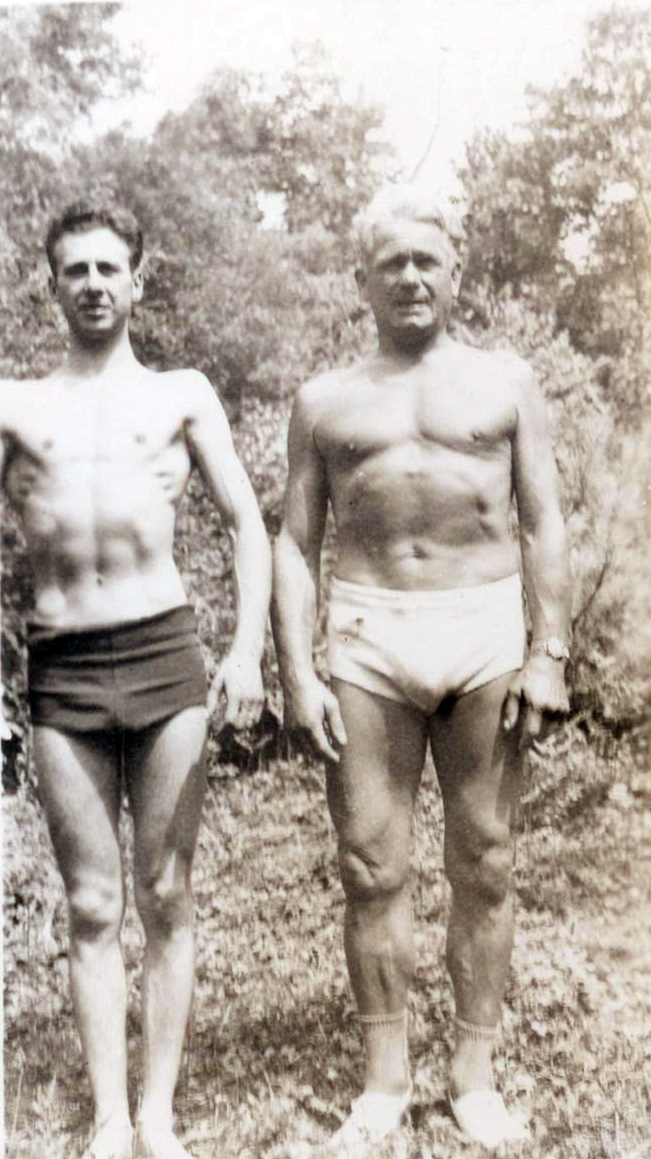
The relationship with Lee extended beyond dance performance. Joseph Pilates, who taught at the Pillow in the 1940s and 1950s, later bought and utilized a nearby cottage and studio in Becket, Cathy Strack, Get to Know Joe Pilates (Pilates Projects, 2022) and in 1954 helped open the Return to Life Club above Ben’s, a clothing store on Main Street in Lee. Barber Anthony Carlino, a Navy veteran, credited Pilates with helping him rebuild his life after the war. Pilates donated equipment and instructed without pay. “He just wanted to do something good for the town and for the people in it,” Carlino said.https://youtu.be/mpQIAGMtB6c?si=Z_OqXSJfOxnzf6Yg
Lee's Young Dancers
In 1955, Madeline Cantarella Culpo began offering ballet classes in Lee.The Berkshire Eagle, December 27, 1955 Her students included Terry AdamoliThe Berkshire Eagle, August 28, 1958and Diane Vranas,The Berkshire Eagle, May 19, 1958 who received scholarships from Shawn to study at Jacob’s Pillow’s school known as the University of the Dance.
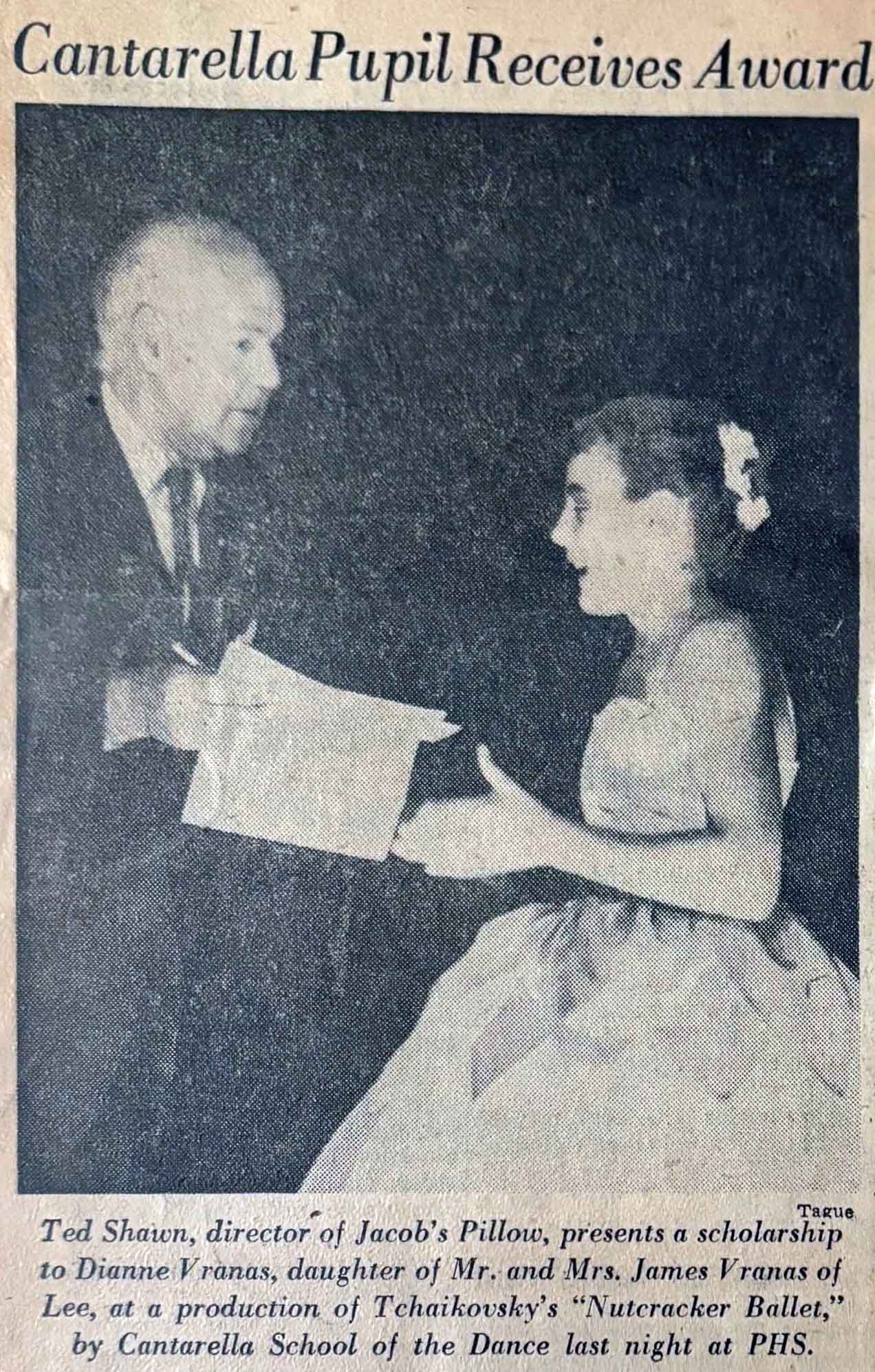
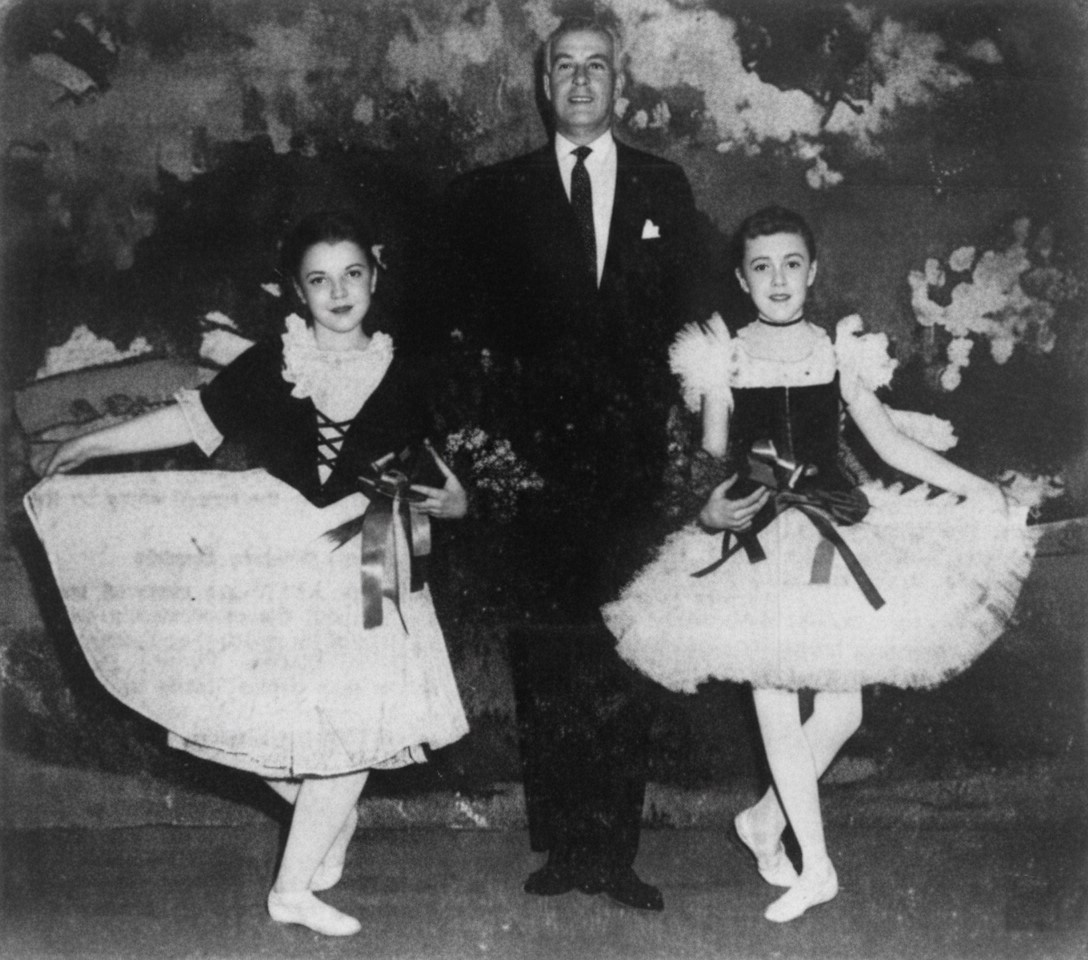
Adamoli said that Cantarella School of Dance provided her with her first exposure to Jacob’s Pillow. She suggested that it wasn’t part of most people’s lives in Lee when she was a child:
I’m assuming everyone knew where Jacob’s Pillow was, but there weren’t a lot of artsy people in Lee. We all knew what was there, like we knew Tanglewood was there, but I never even went to Tanglewood and it was basically next door.
The attendees of Tanglewood and Jacob’s Pillow were the people who came from New York, Boston, and Hartford, who came in the summer. And they went to the festivals and they were art people. They knew art. They knew fashion. They were city people. And we were just people that lived there and we didn’t fully realize what we had.
Once I had learned about Jacob’s Pillow and was part of it, it’s been a part of me. It still is a part of me."
“I don’t think that our town became very connected with Jacob’s Pillow,” reflected Vranas. “Lee had three operating paper mills and was basically a blue collar community and the arts weren’t as much part of our life. As the years have gone by, people in the Berkshires now do seem to love to go to the arts.”
A second generation of Cantarella dancers from Lee had opportunities to study dance and perform at Jacob’s Pillow in the 1970s and 1980s. Dawn Caccamo had a “sparkling solo” when the Berkshire Ballet opened the 1978 summer season with Coppélia.The Berkshire Eagle, July 5, 1978 Then, in 1983 and 1984, Suzanne Polastri received an Astral Scholarship to attend the Pillow’s ballet program for those two summers.
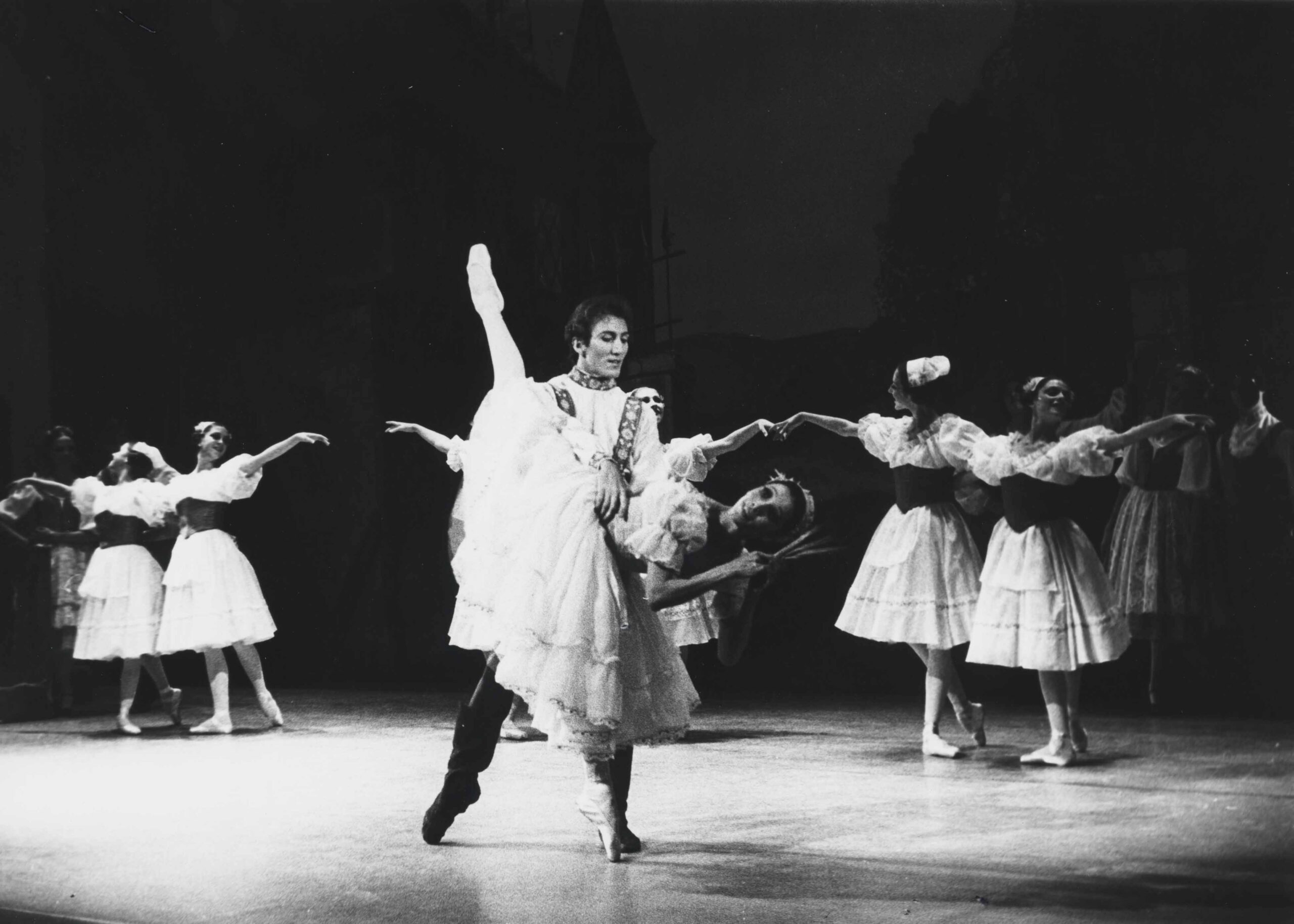
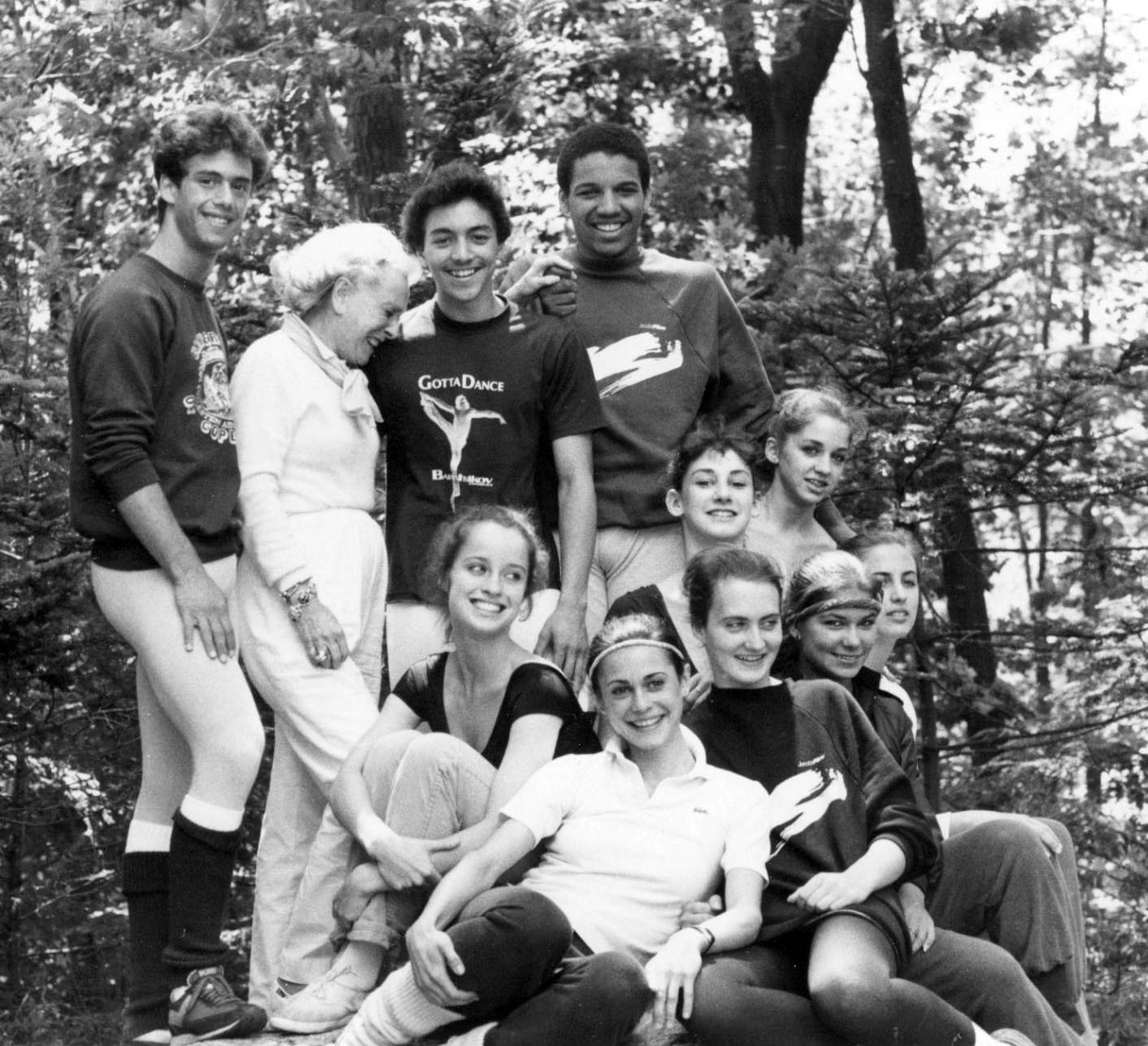
Through Madeline Cantarella Culpo and the students she mentored, the world of Jacob’s Pillow found its way into everyday local life in Lee, shaping children who danced for joy, teenagers who pursued serious training, and adults who carried the discipline and beauty of ballet long after their classes ended. Some, like Dawn Caccamo, moved on to international stages; others remained rooted in the Berkshires while continuing to teach, perform, and support dance in their own ways.
After Shawn: Local Stages and Local Audiences
After Shawn’s death in 1972, the relationship with Lee evolved. Board member Sharon MacDonald, who lived in Lee and had also studied at the Cantarella School of Dance, worked to expand local engagement. “When I joined the board, I made it my priority to attract the greater community through various fundraising efforts and events, lectures, and increased publicity,” shared MacDonald. “In the early 1970s, audiences at Jacob’s Pillow were consistently from New York and Boston…. There were tourists, but not nearly the numbers that we have coming to the Berkshires today during the summer.…The local patrons were doctors, dentists, lawyers, and other business supporters who attended the opening gala every year and bought season tickets.”
To broaden that base, MacDonald and fellow board members, including Lee resident Elinor Collins, established “Jacob’s Pillow Partners.” This group planned the annual gala and other fundraising activities within Berkshire County. The goal was to cultivate not only donors from major cities, but also sustained engagement from nearby towns.
In 1981, the Festival set audience development goals aimed specifically at increasing local attendance. Town Night promotions were created for Lee and other Berkshire communities “to introduce new local audiences to the Pillow and its uniqueness in relationship to other area Festivals.”
“They have been most successful in eliminating the equivalent of the ‘Town/Gown’ schism on the local level,” wrote Audience Development Director Ann C. Landenberger in 1983.Audience Development Annual Report, October 23, 1983 “They have helped develop new audiences that have returned regularly as individuals—many even as subscribers.”
The creation of the Inside/Out Stage in the 1980s revived the spirit of the Friday Teas by offering free outdoor performances with audience engagement with artists. Lee families packed dinners, kids climbed rocks, and parents introduced their children to dance forms they had never seen before.
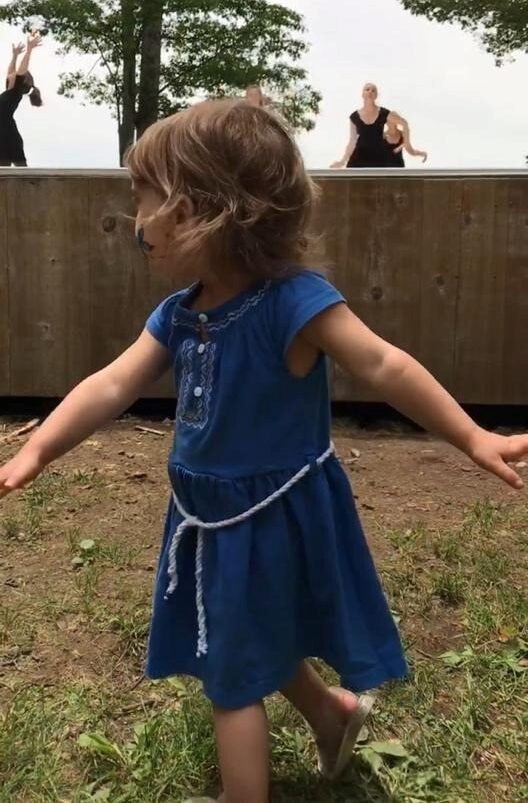
Rob Sorrentino, son of the owners of Joe’s Diner in Lee, first attended an Inside/Out performance with his favorite substitute teacher during high school before he ever danced himself. In college, he became a dance major and received a scholarship to The School at Jacob’s Pillow.
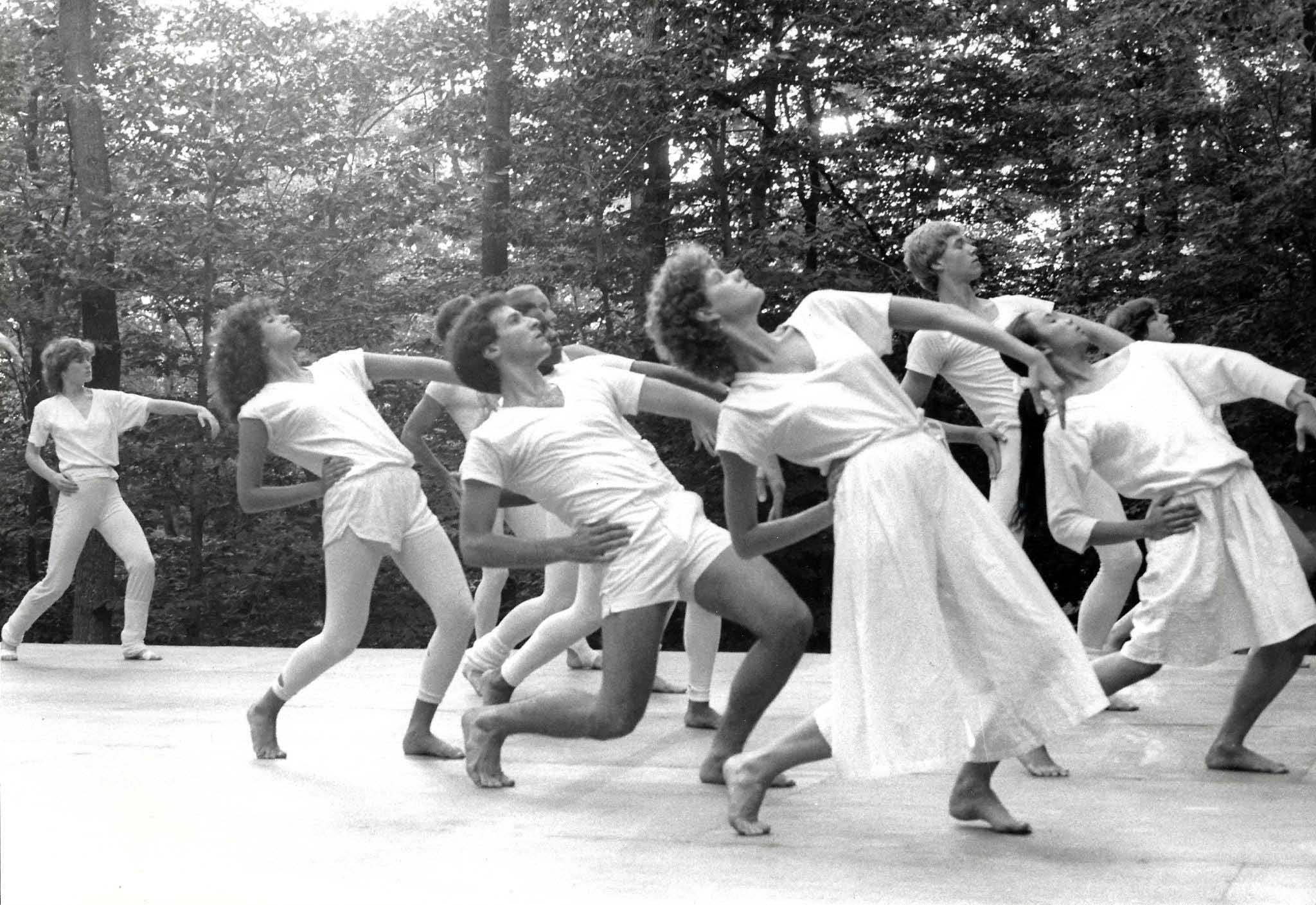
“I lived at home and I worked. So I would get up every morning, drive out to the Pillow, usually too fast, in order to make first class, park, run into class. And then I would get out of class and come work at my family’s diner, then go home and go to sleep, and start it all the next day.”
That opened opportunities for him to perform in the limelight of the outdoor stage and then to become House Manager at the Ted Shawn Theatre.
The Pillow’s connection to Lee also extended beyond young people. Donna Rotondo recalled that her grandmother, Yvonne Besaw of Lee, performed on the outdoor stage in the 1980s and 1990s with other members of the Lee Senior Center. Working with choreographer Liz Lerman of the Dance Exchange, the seniors and Center Director Norma Maroney presented Still Crossing in 1985, 1986, and 1992.
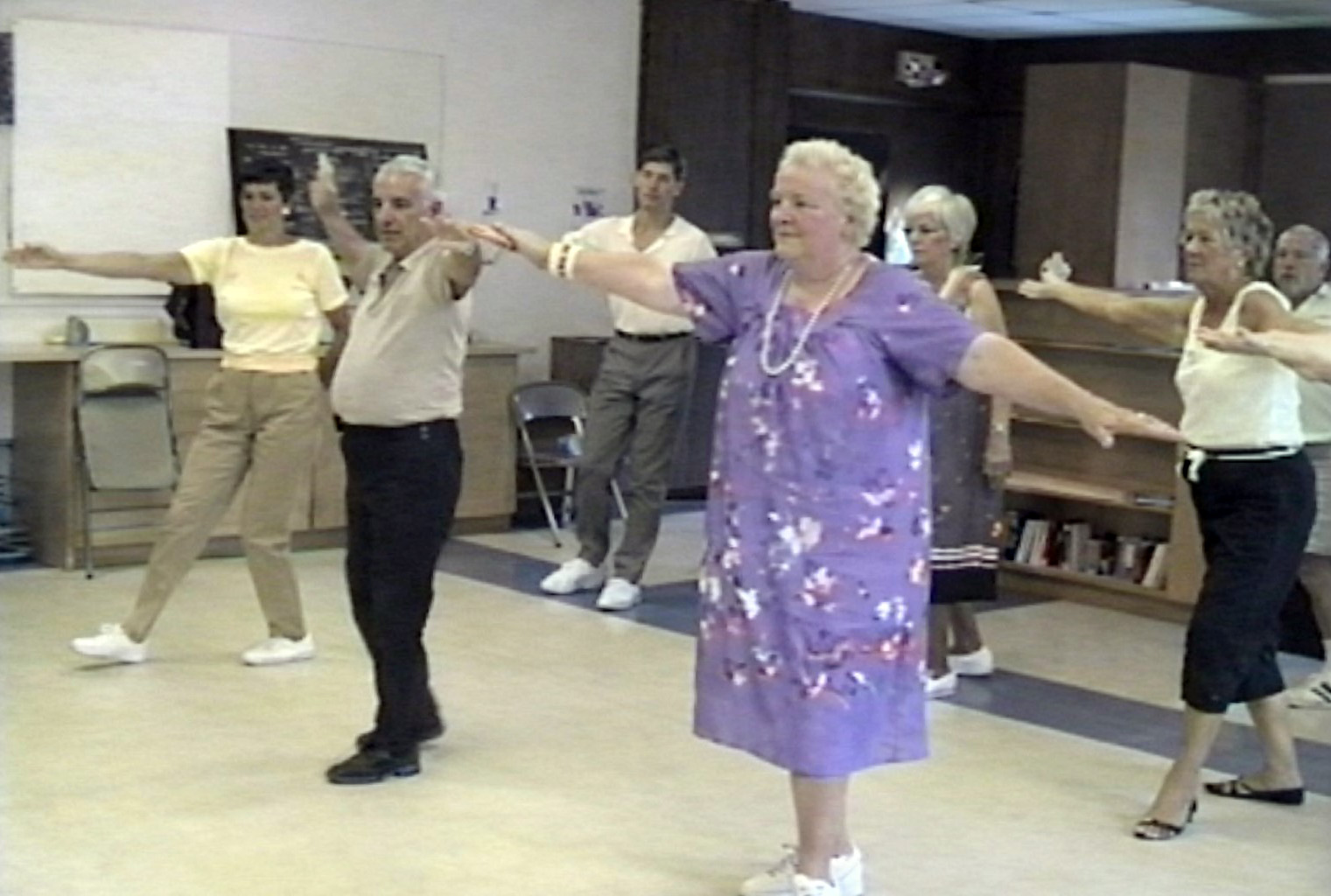
Several Lee seniors returned again in 1993 for HERE, an off site piece about the Housatonic River, created in partnership with the Lee-based Housatonic River Initiative.https://cleanthehousatonic.com/
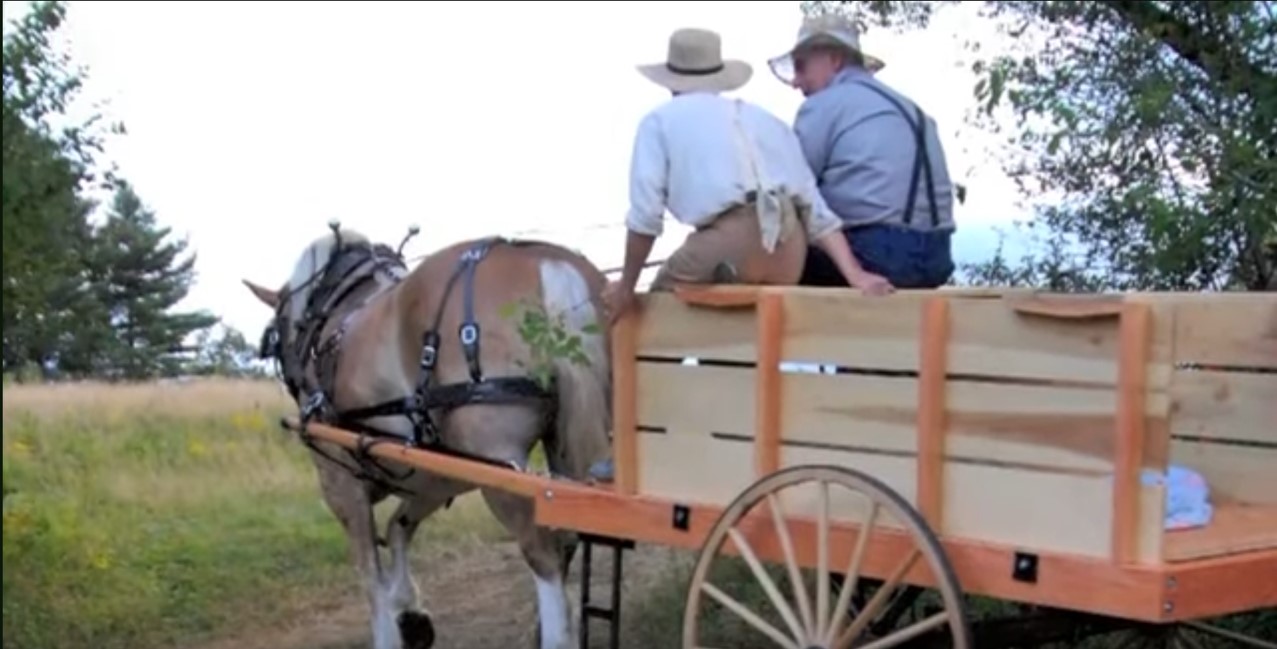
Rotondo’s father, Ralph J. Rotondo Sr., contributed in a different capacity. A farrier and carriage operator, he tended horses for Joanna Haigood’s 2007 production Invisible Wings, inspired by Underground Railroad history. Lee resident Charles Flint served as guest curator and local historian for that project in its original 1998 production and in 2007.
Community Days and Inclusion
Community Day, which grew from earlier open houses, now serves as one of the most visible expressions of local connection. Berkshire families attend, local students perform, and the campus opens itself deliberately to its neighbors with workshops, demonstrations, lectures, and games for all ages.
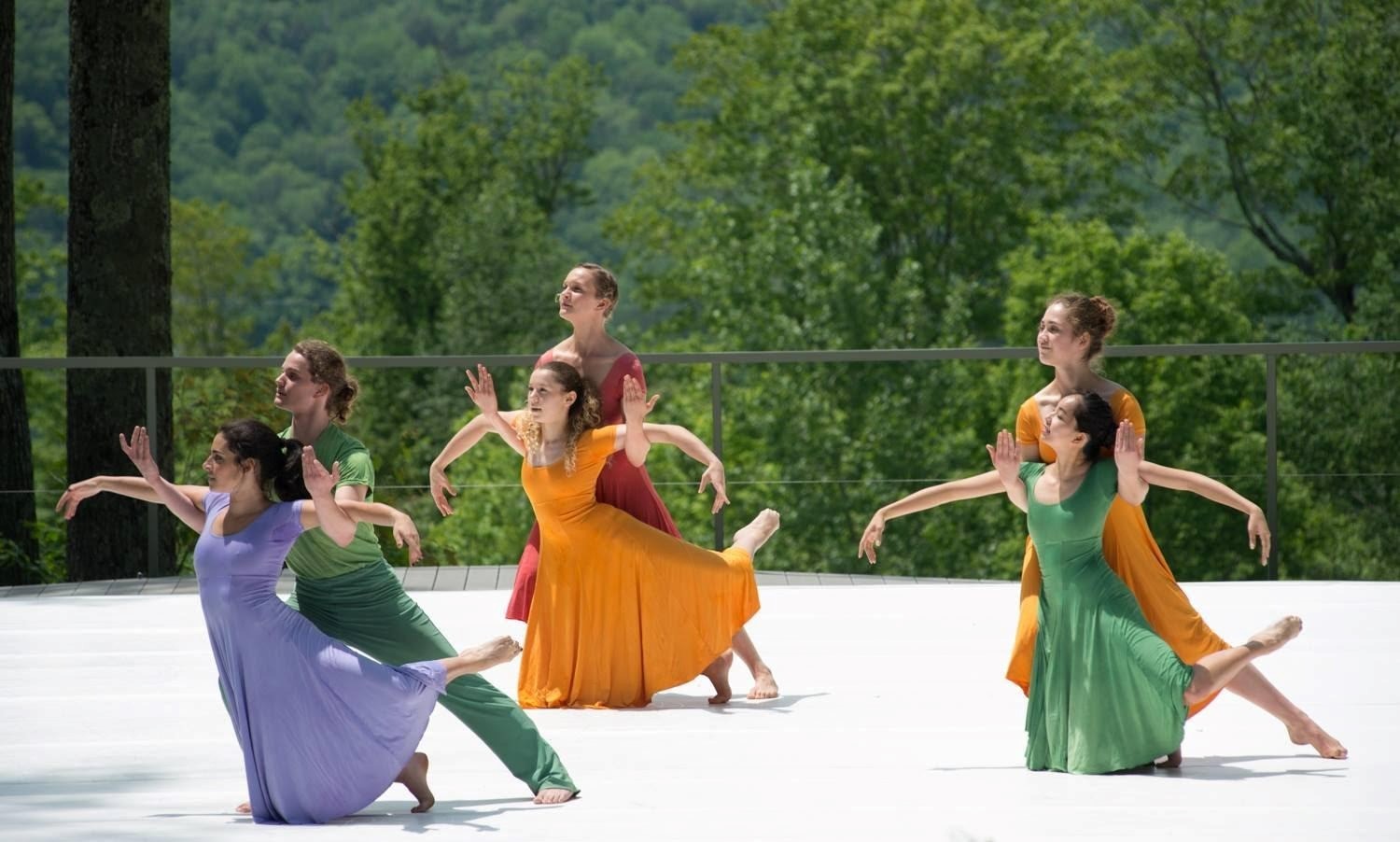
For young dancers from Lee, the event has been both an introduction and homecoming. Rubielle Nejaime, a college student from Lee, shared:
Growing up just 15 minutes from Jacob’s Pillow, I knew it as a familiar name, …[but] I didn’t fully understand the weight it carried in the world of dance—it was simply ‘the Pillow,’ something close to home, not yet the legendary place it would become in my imagination…. I had no sense of the historic significance of the stage just down the road.
It wasn’t until I went away to school, …I learned about its place in history…. Returning there as an artist—to perform for Community Day, to sit in the audience and watch companies from around the world—was like discovering hidden layers of home. The place I once overlooked had become both a mirror and a milestone: it reflected where I came from, and it showed me how far dance could reach.
Jacob's Pillow is…a living reminder of how art can transcend place, and how sometimes the things closest to us hold the greatest significance once we learn how to see them."
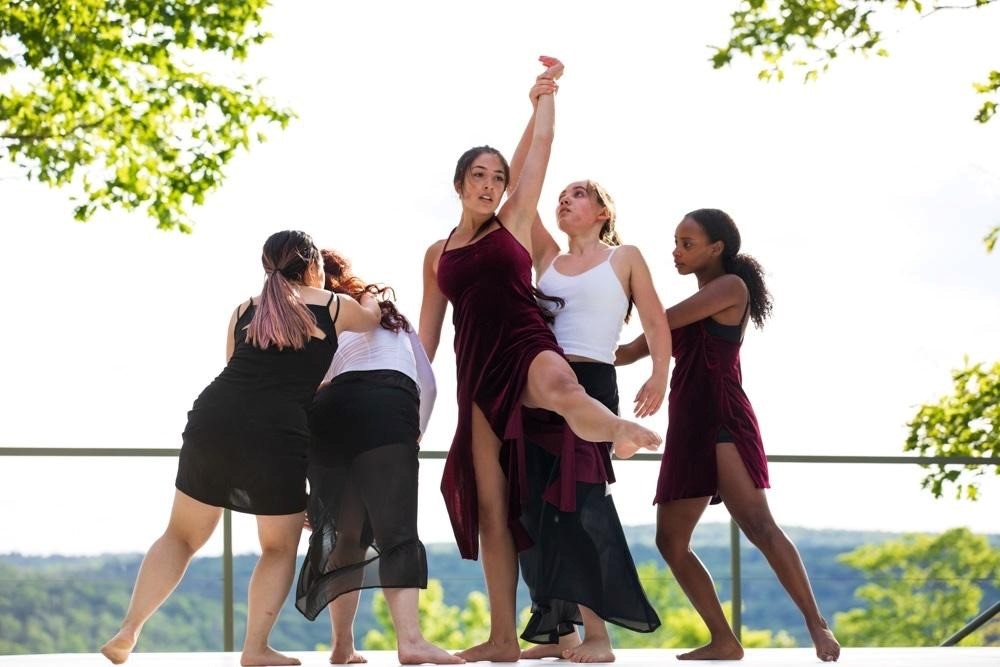
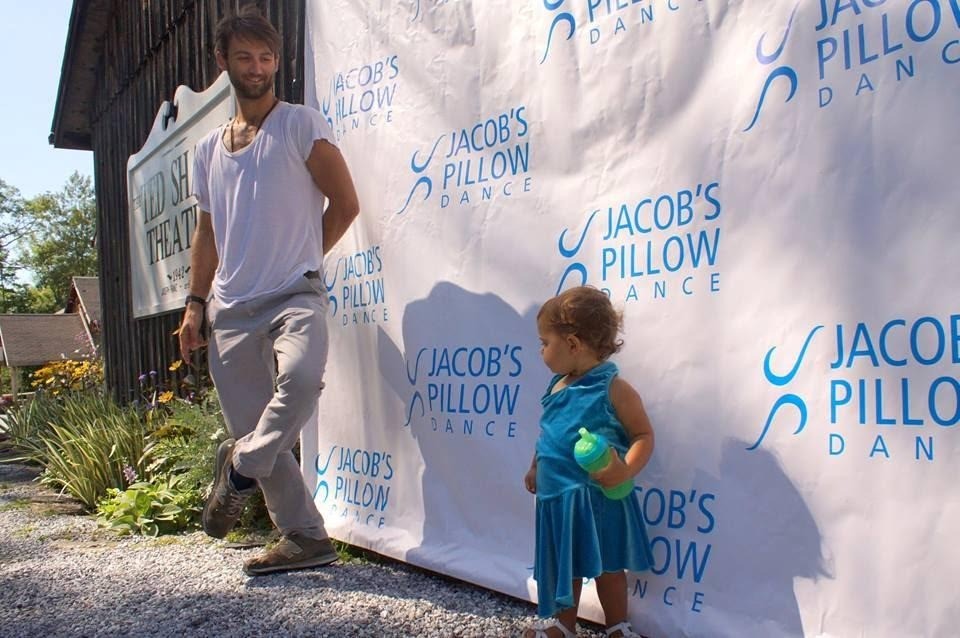
Under Pamela Tatge’s leadership beginning in 2016, the Pillow acknowledged that it was known internationally but not always locally. Year round engagement expanded, and partnerships formed with Lee-based organizations such as the College Internship Program, providing paid internships to young adults with learning differences.
When a racist incident occurred at the 2019 gala, Lee native Andrea Caluori Mancini publicly supported the institution’s efforts to respond and change. “I have been to many performing arts venues, nationally and internationally, and of all of them, I’d say Jacob’s Pillow is the one that has exposed me the most to different races and cultures, via the performers from all around the world. I truly cherish Jacob’s Pillow and have visited every summer for as long as I can remember,” wrote Mancini. “I applaud the Pillow’s management for its intolerance of this incident and attempts to thwart similar future ones.”The Berkshire Eagle, July 23, 2019
The Pillow engaged Multicultural BRIDGE, a nonprofit based in Lee, for cultural competency training. Inclusion became central to its civic identity.
The Pillow’s commitment to LGBTQIA+ artists has also shaped its public identity, hosting an annual Pillow Pride celebration. The Pillow participates regularly in Berkshire Pride in Pittsfieldhttps://www.berkshirepride.org/ and joined the first ever Lee Pride on June 14, 2025.
Business, Marketing, and Everyday Life
Lee’s 2024 Master Plan notes that cultural attractions such as Jacob’s Pillow strengthen the town’s tourism economy. In 2024, the Festival reported approximately 90,000 annual attendees, with roughly one third drawn from the Berkshires.
Ted Shawn once walked Main Street asking merchants to hang posters. Today, marketing interns canvass Lee each summer, visiting dozens of shops and restaurants.
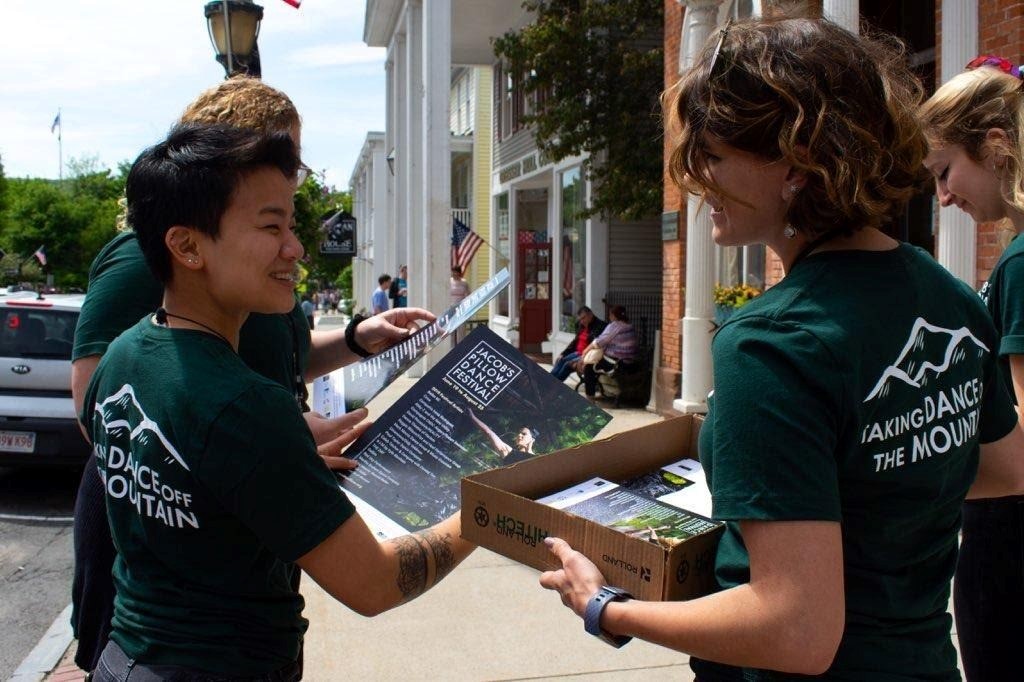
The economic relationship is longstanding. The Pillow rents lodging in Lee, partners with the Lee Chamber of Commerce,https://leechamber.org/cultural/ and contracts with local vendors such as Carr Hardware, Henry’s Electric, and Dresser-Hull.
“I see the love of dance and the arts that they provide to the community and visitors of the Pillow. It is very enjoyable to see performers stay here and see the hotel guests interact with them,” said Mayur Patel, owner of the Black Swan Inn in Lee. “We have seen a lot of loyal Jacob’s Pillow patrons love that they see the performers at the hotel and are able to interact with them. We have even seen guests who are in the Berkshires who do not know about Jacob’s Pillow and have attended shows because of the interactions they have with performers. We are slowly becoming known for this and guests are more likely to book at the Black Swan because we are the preferred hotel.”
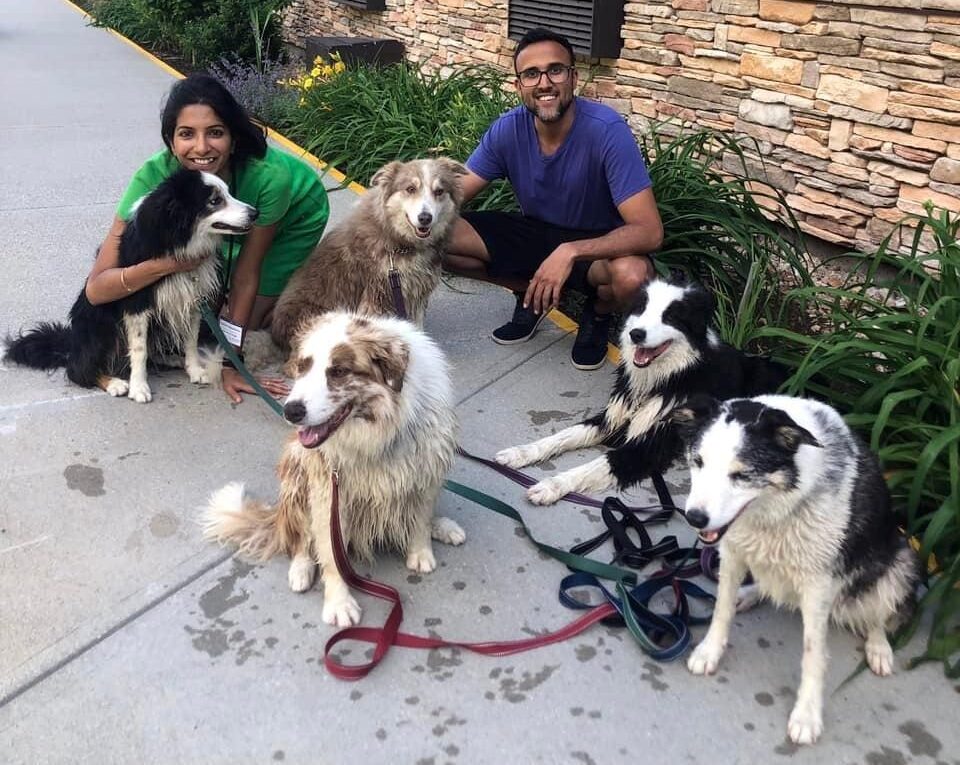
Before new housing with laundry facilities opened in 2017, interns used the Lee Wash & Dry laundromat, arranging rides or drop off service on days off. Even after on campus machines were installed, facilities staff continued to use their local services.

From the 1950s through the 1980s, the Here-U-R Inn in East Lee served as an informal Pillow gathering place. Jennifer Dunning from The New York Times described it as a “second home for the dancers.”The New York Times, August 21, 1979
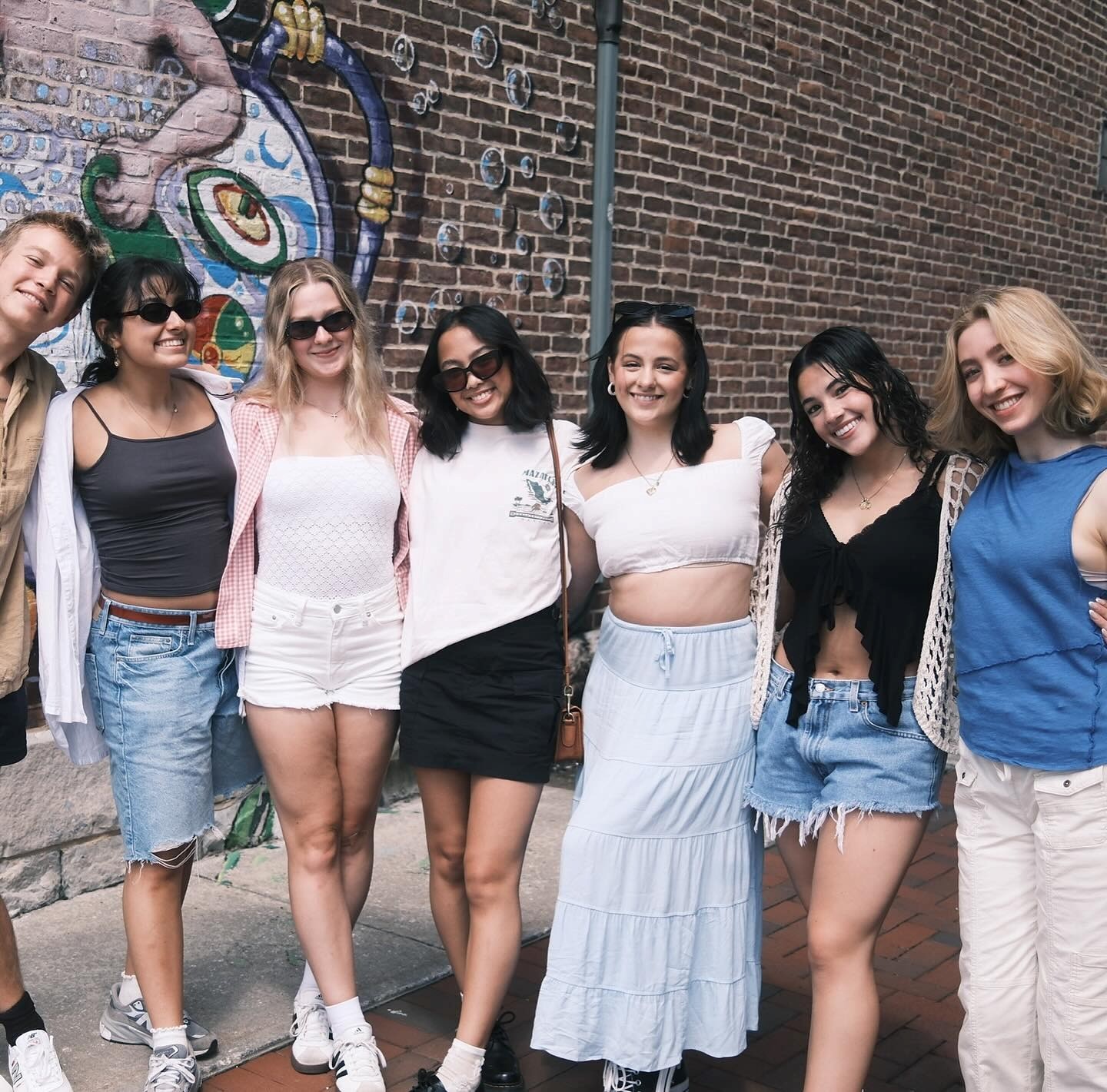
Contemporary interns and dancers frequent Lee restaurants, cafés, and ice cream shops such as Starving Artist Café, Burmese Bowl, The Station, Mint, Agave, Bliss Crumbs and Coffee, Joe’s Diner, Lucky’s, and High Lawn Farm. Interns hunt for good deals at Lee’s many antique and thrift stores as well as at the Lee Premium Outlets.
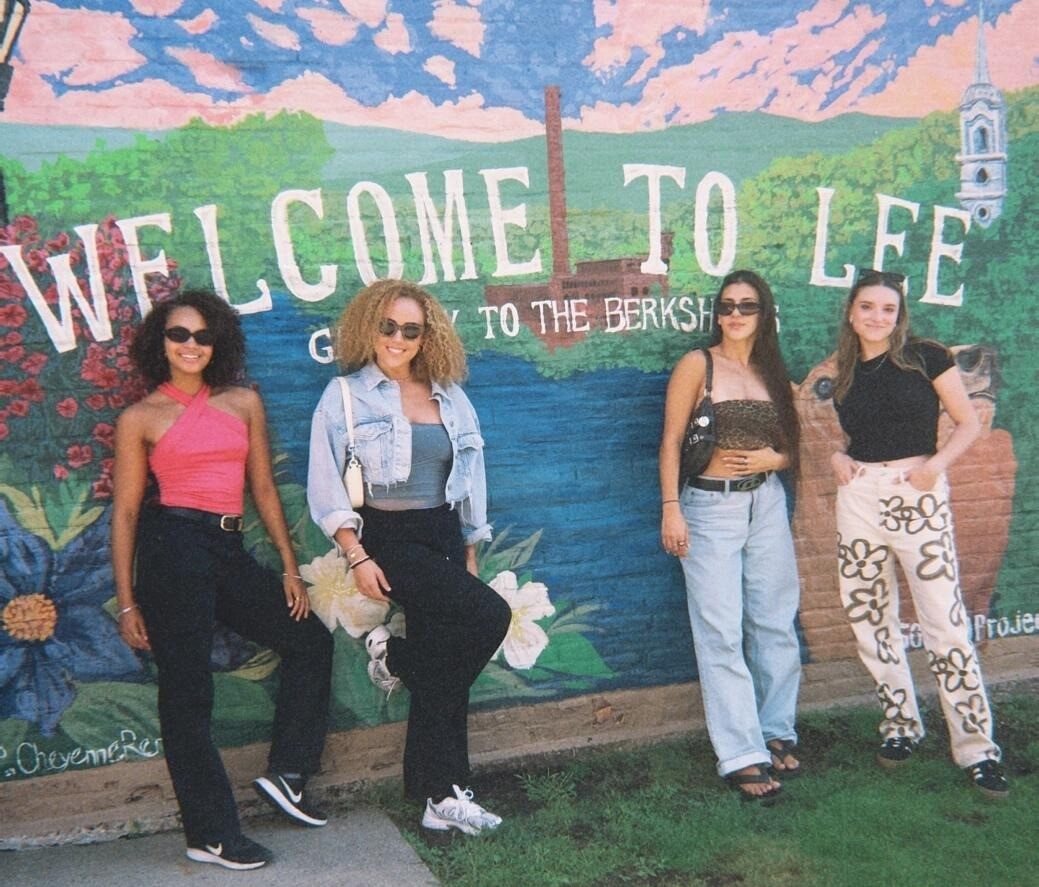
Celebration and Loss
The relationship between Jacob’s Pillow and Lee is visible in emergency moments as well. The Covid pandemic shuttered the campus in 2020 and then a fire destroyed the Doris Duke Theatre that November. The Lee Fire Department responded and supplied assistance.The Berkshire Edge, November 17, 2020

Pamela Tatge later wrote to the Lee Fire Chief Ryan Brown: “From the bottom of our hearts, we thank you and the Town of Lee for supporting us last week at our time of greatest need.”
When the 2026 Jacob’s Pillow Dance Festival lineup was announced in February 2026, the Lee Chamber of Commerce (headed by former Pillow intern and staff member Alexandra Heddinger) said: “Arts and culture are a powerful part of our local economy, and this is a BIG one…. We can’t wait!”The Berkshire Edge, April 22, 2025
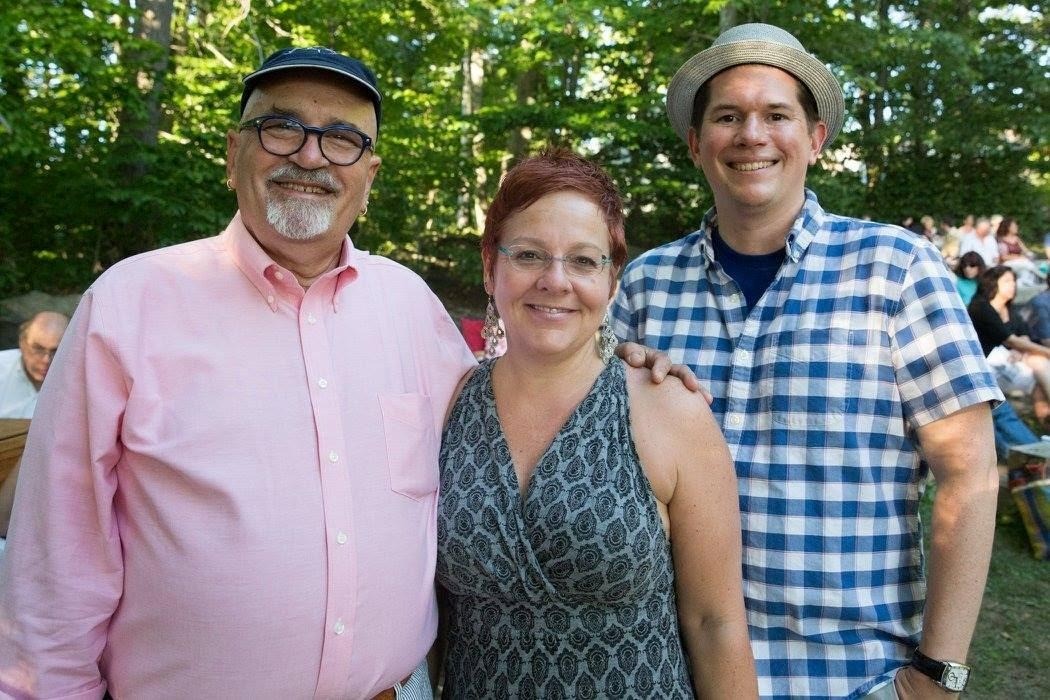
“I live up here because of the Pillow. I’m happy to see it grow so strong,” said Heddinger. “Jacob’s Pillow has been part of life in the Berkshires for nearly a century, and here in Lee, we’ve built a real partnership with them. Local businesses welcome performers and visitors, the Pillow has brought dance right into our schools through in-school residencies, and they’ve participated in supporting downtown activities, from helping with seasonal decorations to community events. I’m thrilled that I get to go back and volunteer at a place that holds such a special place in my heart. It’s these everyday connections, year after year, that make our relationship so strong—and we’re excited to keep growing it for the future.”
Conclusion
Nearly a century after Ted Shawn first arrived in Becket, Jacob’s Pillow remains physically located there. Yet its sense of place has always extended into Lee.
From the 1941 rescue meeting in a Lee living room to scholarships for Lee children, from Rotary speeches to Community Day performances, from bank loans to fire trucks, and from the post office to countless ice creams, the Festival’s history is inseparable from the town that sustained it. The relationship has never been abstract. It has unfolded through meaningful people-to-people connections and countless touch-points all along Jacob’s Ladder Road and throughout Lee’s downtown corridor.
Though its stages stand in Becket, its daily life, reputation, and survival have long been intertwined with the town of Lee and its people.