Unmapping the Grid: Toward Other Choreographic Possibilities
In dominant Western traditions, choreography has often been synonymous with control: an aesthetic system grounded in geometry, repetition, and spatial precision. From ballet’s formalized vocabulary to the architectural rigor of modern dance, movement is frequently structured to conform to a visual or conceptual grid. Even works that aim to resist these norms often remain in dialogue with the same structures they seek to undo.
But not all choreography emerges from this paradigm. This essay turns to the work of Pichet Klunchun (Thailand) and Yin Mei (China/US), whose practices offer an alternative logic, loosening the demands of prescription, order, and legibility through an emphasis on process, relation, and listening. Their choreography does not seek to break the grid by force, but to make it irrelevant, repositioning movement as a living inquiry shaped by memory, cultural inheritance, and the friction of embodied histories.
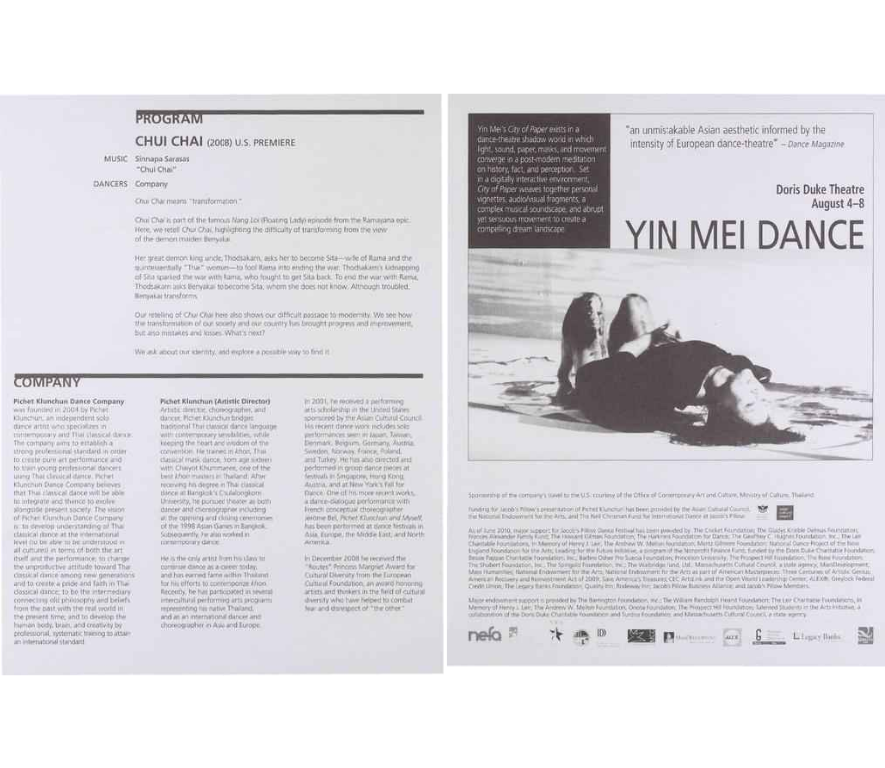
Klunchun’s Chui Chai and Mei’s City of Paper, both presented at Jacob’s Pillow in 2010, exemplify this orientation. Though grounded in vastly different performance traditions and political contexts, both choreographers craft works that hold space for ambiguity, transformation, and the unfolding of memory across time. In doing so, they invite audiences to understand dance as a dynamic terrain constituted through the interplay of rupture and continuity.
Pichet Klunchun: Transforming from Within
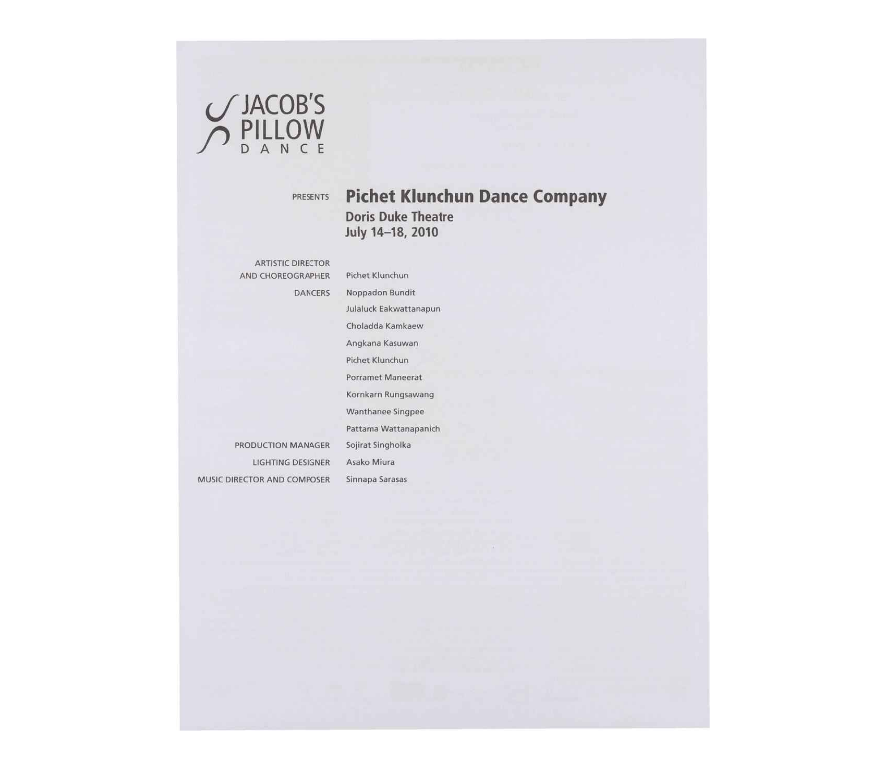
Pichet Klunchun is an internationally award-winning contemporary Thai dancer and choreographer who began studying Khon, the Thai masked dance-drama, at sixteen under master Chaiyot Khummanee. Building on this foundation, he founded the Pichet Klunchun Dance Company in 2004, an independent Bangkok-based ensemble dedicated to creating contemporary works rooted in Thai classical traditions while training young dancers in strong classical techniques.
A notable example of his approach is Chui Chai (2008), in which Klunchun draws upon Khon to explore how tradition can be reimagined in the present. He approaches classical forms as evolving vocabularies, working with their capacity to change while remaining in conversation with their histories. His choreography stages transformation from within, letting the internal logics of tradition stretch to meet the questions of a contemporary world.
Rooted in the Ramakian—the Thai iteration of the ancient Indian epic Ramayana—Chui Chai centers Benyakai, a demon who impersonates Sita to deceive Rama. This act of disguise becomes a generative metaphor for Klunchun’s broader choreographic ethos: how can one inhabit a form without being consumed by it? What does it mean to move through tradition while also reshaping its contours?
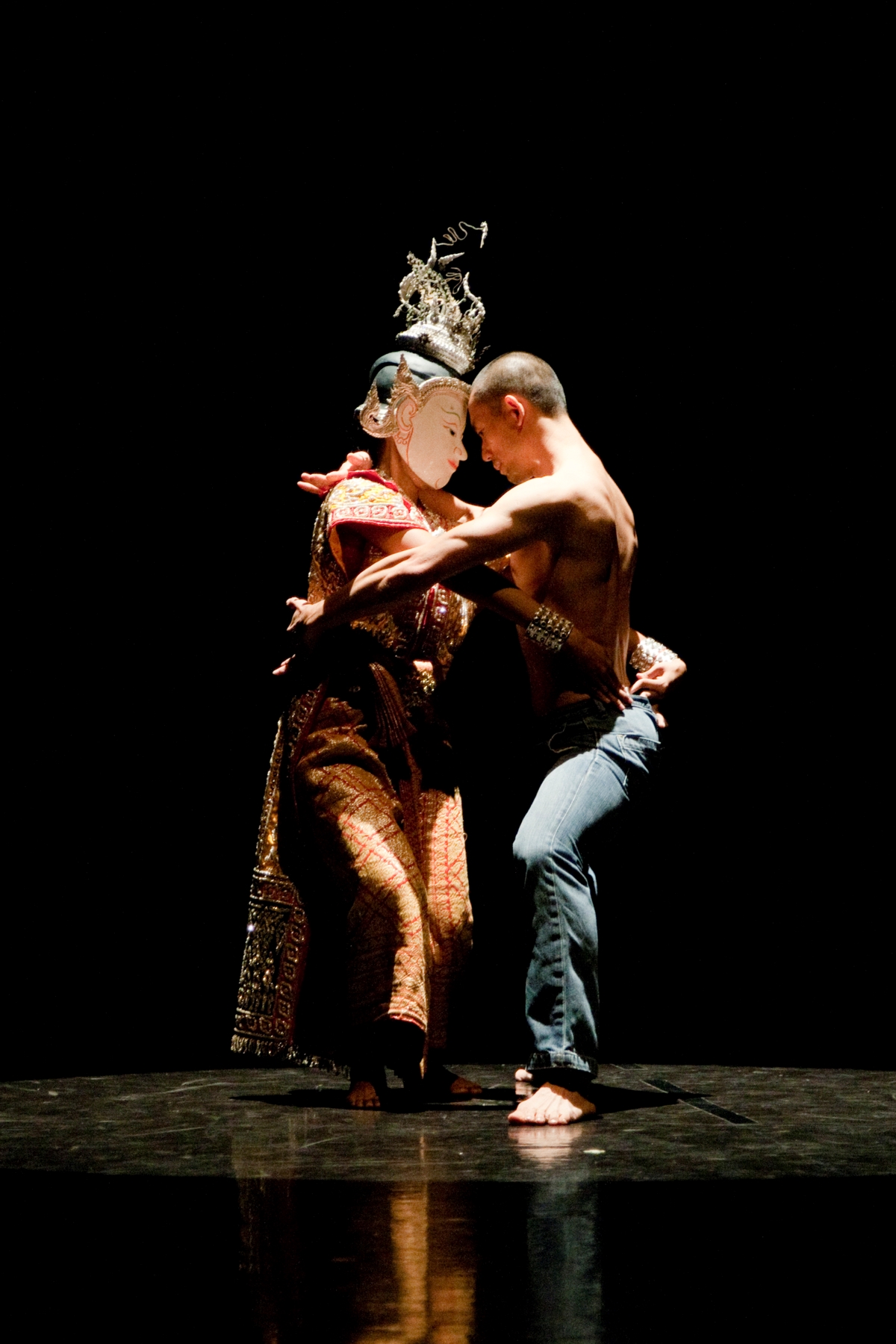
A key moment in the U.S. premiere of Chui Chai at Jacob’s Pillow crystallizes this inquiry. Klunchun, in jeans and bare torso, shares the stage with dancers in full Khon regalia. When they exit, he remains alone—soon joined by a dancer portraying Benyakai, danced in ornate costume and trained gesture. Their duet unfolds as a study in intimacy and reflection. Beneath a single spotlight, they mirror each other gently, neither dominating the other. The modern body does not parody the traditional; rather, it listens, absorbs, and responds.
This reciprocal movement complicates any linear narrative of modernization. The contemporary and the classical emerge as interlocutors, each working on and through the other. In Khon, where male dancers often perform female roles, a jeans-clad man embodying Sita becomes an extension of possibilities already present within the form. As gender, form, and identity blur, meaning becomes more expansive and open-ended.
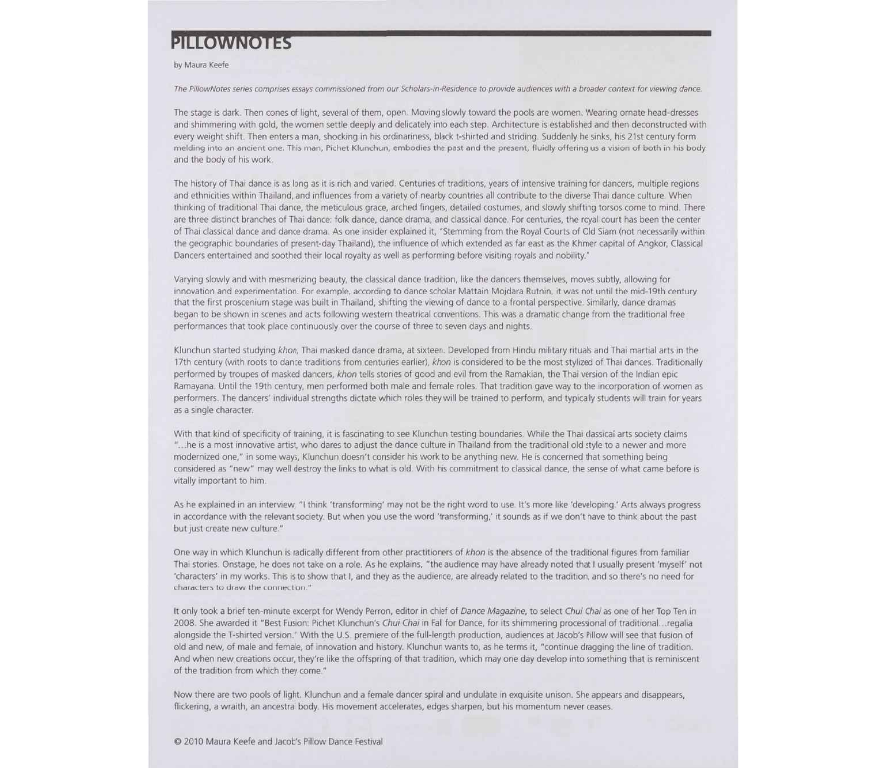
Klunchun himself rejects the language of novelty. As Maura Keefe (2010) writes in her PillowNotes:
“Klunchun doesn’t consider his work to be anything new. He is concerned that something being considered as ‘new’ may well destroy the links to what is old[…] As he explained in an interview:
... Arts always progress in accordance with the relevant society. But when you use the word ‘transforming,’ it sounds as if we don’t have to think about the past but just create new culture."
Transformation, then, is relational, emerging through an ongoing negotiation between past and present. Klunchun’s choreography recontextualizes tradition, allowing it to remain active and responsive as it moves into new contexts.
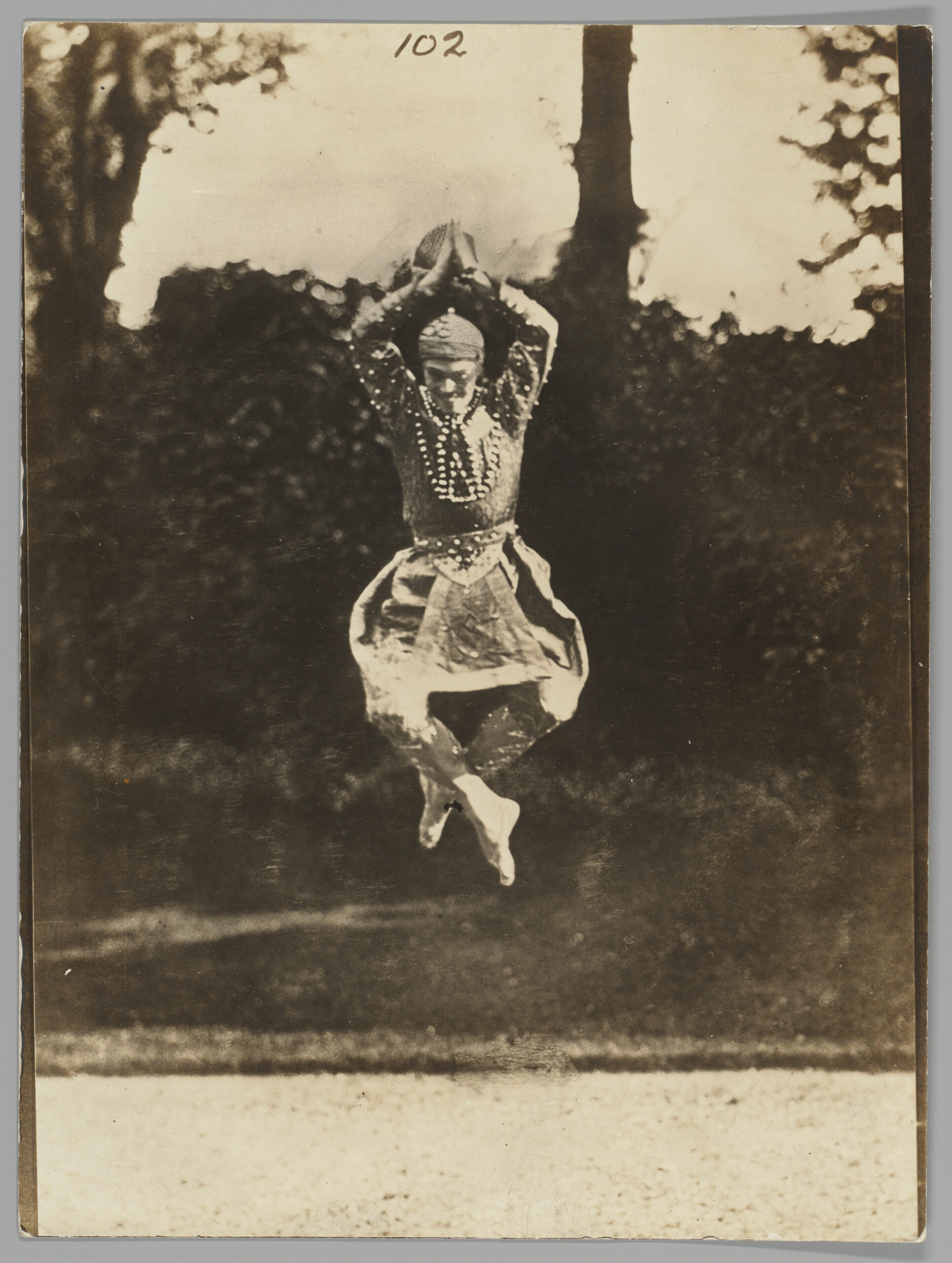
This commitment is evident in works like Nijinsky Siam (2010), which responds to archival images of Vaslav Nijinsky performing Danse Siamoise (1910)—a piece choreographed by Michel Fokine and loosely inspired by Thai classical dance. Rather than emulating these images, Klunchun treats them as provocations—evidence of Orientalist misreadings that demand re-inscription. Drawing from Khon and Thai shadow puppetry, he reframes what was once distorted, reclaiming Thai performance aesthetics from their colonial appropriations.
In a 2017 conversation with Japanese dance scholar Daisuke Muto, part of the ASIA HUNDREDS interview series by the Japan Foundation Asia Center, Klunchun described his process:
“Thought, or knowledge, is one of the elements that form a dancer’s body. It will be converted into physical language[…]
If the dancers cannot liberate themselves from the physical memory that has been accumulated through training, they get stiff[...] Researching and obtaining new information should contribute to the formation of new memory."
Here, memory becomes something that is continually worked through and reshaped in practice. Like movement, it is carried through the body even as it changes over time. In Klunchun’s work, choreography becomes a way of negotiating what the body inherits and how that inheritance is questioned and reworked in the present.
Yin Mei: Holding the Fragments of Memory
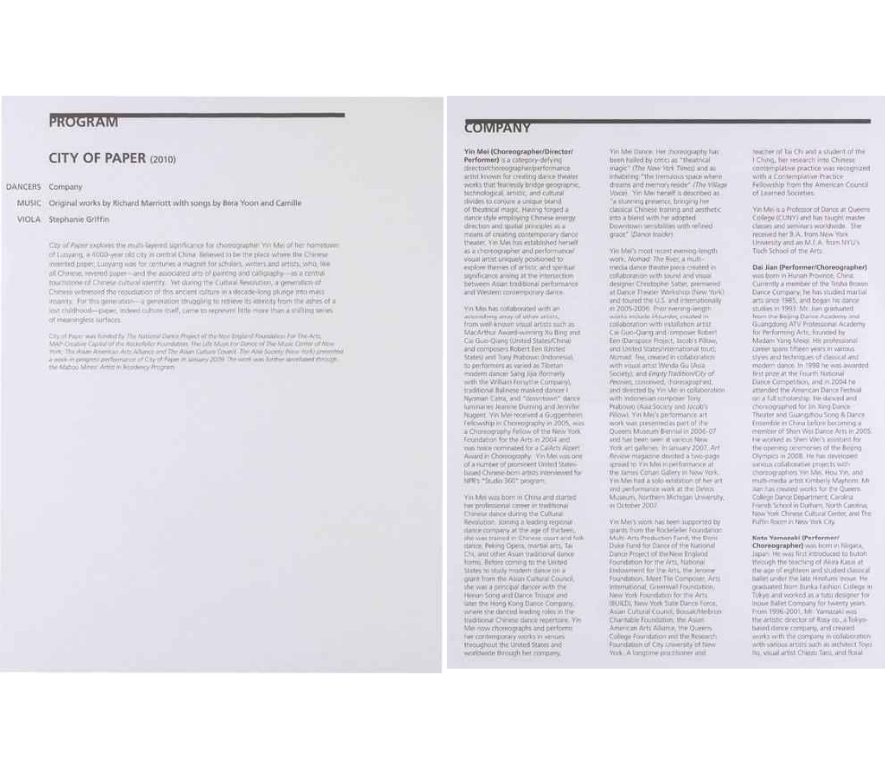
Where Klunchun choreographs transformation from within tradition, Yin Mei works through fragmentation. A Chinese-born choreographer and interdisciplinary artist, Yin Mei explores themes of memory, cultural erasure, and personal history shaped by the Chinese Cultural Revolution. She is the founder and artistic director of Yin Mei Dance, a New York-based company that blends traditional Chinese aesthetics with contemporary dance to create reflective meditations on identity and displacement. Mei also serves as Professor and Director of Dance at Queens College, City University of New York.
Born during China’s Cultural Revolution and shaped by diaspora, Mei’s choreographic vocabulary is deeply attuned to absence—what is remembered, what is lost, and what persists in altered form. Her work evokes the textures of the past—uncertain, dissolving, and deeply felt—without attempting to reconstruct it.
To learn more about how China’s Cultural Revolution shaped Yin Mei’s focus on fragmented memory and the erasure of cultural history, listen to this PillowVoices episode featuring a 1999 conversation between Suzanne Carbonneau and the artist, recorded during Mei’s Pillow debut with her work Empty Traditions / City of Peonies.
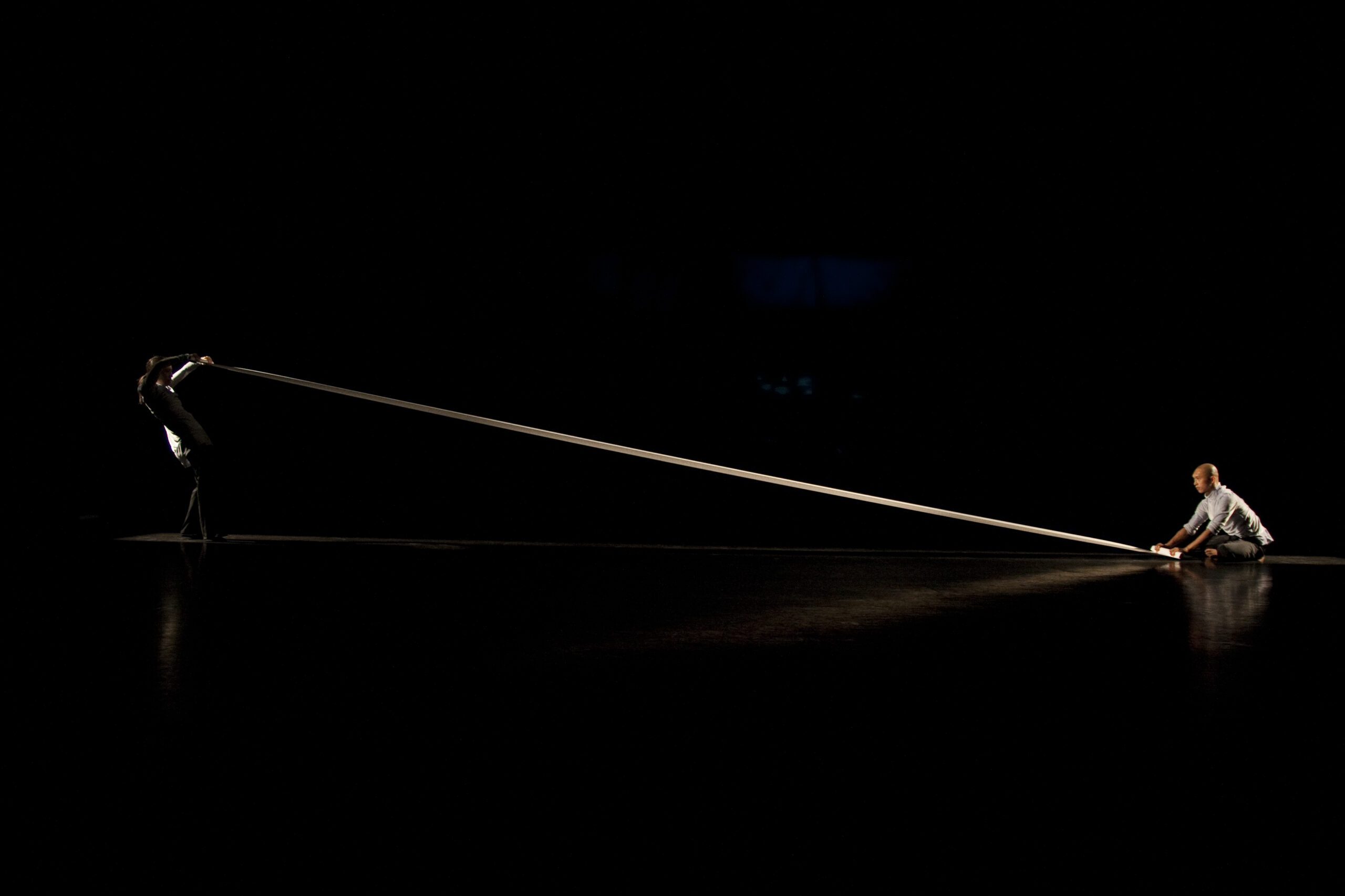
In City of Paper (2009), Mei assembles a multisensory archive of personal and historical memory. Movement, text, image, and material converge in a dance of disintegration. The performers interact with large sheets of rice paper—ripping, stretching, folding, submerging, and inhabiting them. These delicate surfaces become both prop and metaphor, embodying the fragility of memory and the porous boundaries between history and its erasure.
If Klunchun’s choreography is rooted in continuity, Mei’s is shaped by rupture. Yet both are concerned with how memory lives in the body—how it is held, broken, and sometimes made legible through movement. In City of Paper, repetition, stillness, and silence disrupt narrative resolution. The dance bears witness to experiences that resist being fully named or narrated.
A central duet between two dancers—a woman and a man—brings these concerns into focus. Their contact improvisation unfolds in slow spirals, shared weight, and subtle shifts of balance. A hand pressed into a shoulder, a head brushing against another, a suspended lift: each moment holds the tension of mutual dependence. Set against fractured imagery of China’s political past, represented by projections and symbolic props like paper, this duet becomes an embodied archive of resilience and care.
Yin Mei Dance, “City of Paper”, 2010 In contrast to the state-imposed choreographies of the Cultural Revolution—where movement was tightly scripted and ideologically laden—Mei’s approach privileges unpredictability, responsiveness, and subtlety. What emerges is more than a political reversal; it asks us to rethink what it means to move and remember together.
As she writes on her website:
“How does one deal with memories that burn in the brain, that haunt one’s waking hours, that tattoo images of rage beneath one’s skin?
For me, the trauma of my early years has led, not toward social engagement, nor toward abstraction, but toward the unmapped provinces of my own heart.”
Here, choreography works more like a trace than a map. Mei’s dancers move through what history has left behind, allowing the body to hold experiences that may be difficult to put into words. Like Klunchun, Mei uses dance as a way of asking questions, though her work often finds those questions in silence as much as in movement.
Toward a Relational Choreographic Practice
The works of Pichet Klunchun and Yin Mei offer distinct but related ways of thinking about choreography, grounded in relation, resonance, and re-imagination. Working through transformation and fragmentation in different ways, both artists approach tradition and memory as processes that remain open to change. Their work stays with the tensions between past and present, form and feeling, and what can and cannot be made visible.
Choreography, in this sense, becomes a way of navigating these tensions rather than resolving them. Movement can ask questions, hold histories, and make space for experiences that are difficult to articulate. The body becomes a place where history is carried, examined, and reworked.
These practices can also sit uneasily within a global dance marketplace that often values particular forms of legibility and recognizes “innovation” through frameworks shaped by Euro-American aesthetics. Klunchun and Mei approach choreography from elsewhere, drawing on forms of cultural knowledge and embodied histories specific to their respective contexts. Their work suggests other ways of understanding what choreographic experimentation can look like and where it might come from.
Engaging with their work therefore requires attention to what remains unresolved, unspoken, or only partially visible. Perhaps this is where their work most clearly challenges the grid: through ways of moving that do not need to confront or overturn it directly, but instead find other pathways through and around it.